
Reviewed · WALKING TOURS
Classic Stockholm Small Group Walking Tour | 3 Hours
This tour is interesting because it reads Stockholm like a story, starting at the city’s southern viewpoints and ending in the place where big national moments happen, Stockholm City Hall. I especially like the on-the-ground pacing and how your guide turns street corners into real context. I also love that you finish with practical local recommendations so the walk turns into an actual plan for the rest of your day. One thing to consider: it is mostly exterior sight time, so if you’re expecting long museum stops, you will need to add those yourself.
The route is built for first-timers and repeat visitors alike, with quick stops at German church history, Viking-era artifacts, medieval sculpture, royal monuments, and the modern political heart. I’ve seen this tour work well because guides like Kenneth and Rachel are known for answering questions as you walk, not saving everything for the end. You’ll cover a lot in three hours, so wear good shoes for cobblestones and expect some stairs at the fun side alley portion.
Key highlights you’ll feel fast

- Small-group walk with a relaxed tempo that still covers the big landmarks
- Storytelling guides who answer questions on the spot and share personal context
- A route through layers of Stockholm (medieval core, German churches, Viking roots, royal power, modern government)
- Great photo moments built into the route, including a few famous nooks
- No heavy ticket stress, since the stops are mainly viewed from outside
- A strong finish at City Hall, where you get the architectural and cultural meaning in plain language
Why this 3-hour route helps you understand Stockholm
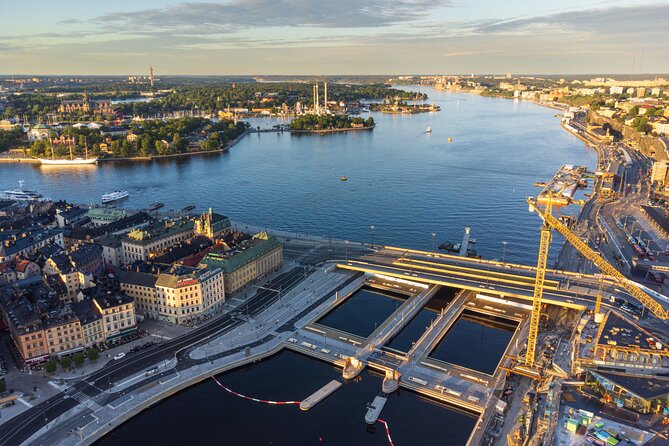
Stockholm can feel like it’s made of islands, bridges, and overlapping time periods. This walk makes that feel less confusing. In three hours you go from the city’s southern rise and development zone to the old center, then move into the royal and political quarter, ending at Stockholm City Hall.
The value here is not just the list of sights. It’s how your guide explains why these places matter, from street names to buildings that still function today. That turns your first look into something you can build on when you wander later.
For most people, the “classic Stockholm” shape of the city finally clicks. You get a mental map for where Gamla Stan starts, how Slussen shaped movement over time, and why City Hall is the emotional end point of so many Swedish celebrations.
More Walking Tours in Stockholm
- Stockholm: Ghost Walk and Historical Tour
★ 4.7 · 2,685 reviews - Stockholm Gamla Stan: Old Town Walking Tour with Local Guide
★ 4.7 · 1,714 reviews - Walking Tour of Stockholm Old Town
★ 5.0 · 1,175 reviews
Start at Götgatan 1, and why the meeting point matters
You start at Götgatan 1, 116 46 Stockholm, at the east entrance of the Stockholm City Museum (Stockholms Stadsmuseum). You’ll get a message before the tour with clear directions and a phone number if you get stuck.
I like this setup because Stockholm can be busy and compact. A wrong turn at the start wastes time you could spend learning the city. Also, you’re near public transportation, so it’s easy to connect if you’re arriving by tram, metro, or bus.
Bring your mobile ticket and keep your phone handy. The tour is about three hours, and the early minutes are where you build trust with the route, your guide, and the pace.
Södermalmstorg and Slussen: Stockholm’s changeable face
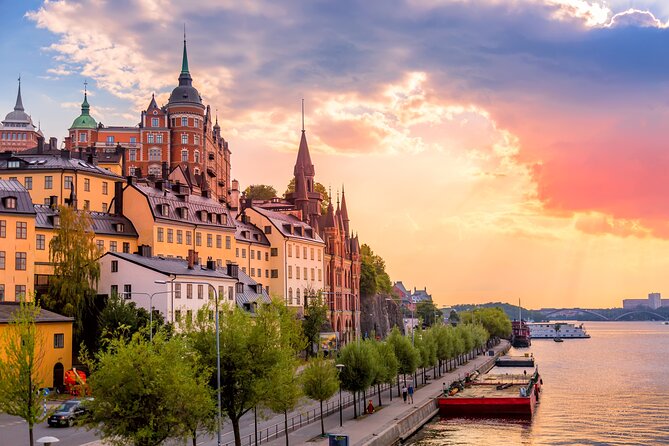
The walk begins at Södermalmstorg, then quickly moves to Slussen, the “lock” area that has been central to Stockholm’s evolving waterfront and transit story. Your guide gives you a historical overview and also points out what’s been happening during the project period, 2016 to 2025.
What I like about this first section is that it explains Stockholm’s constant negotiation with water, traffic flow, and city planning. Even if you don’t know Swedish urban policy, the guide makes the logic clear: these areas get rebuilt because the city keeps growing and needs different ways for people to move.
A possible drawback: the early segment sets a historical tone, which is great, but it also means you’ll want your shoes ready. You’ll be walking steadily from the start.
Gamla Stan approach: Järntorget and the “Iron Square” story
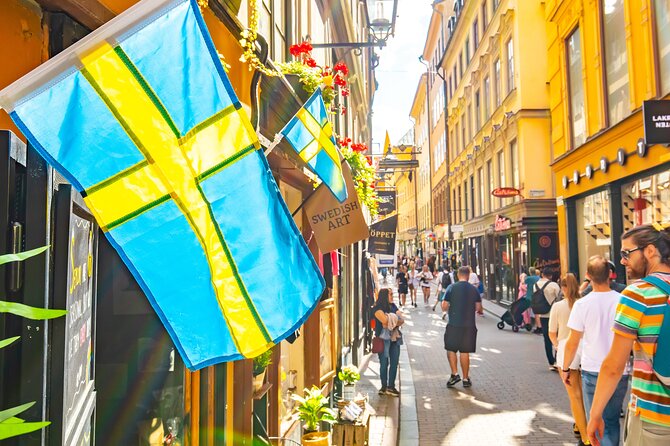
Next comes Järntorget, a square tied to older industry and the way trade, culture, and power mixed in the same blocks. The name itself is a clue, because Järntorget translates to Iron Square.
Your guide points out notable buildings and connects the square to cultural landmarks, including a poet you’ll learn about. This stop works because it’s a reminder that Stockholm’s center was not just royal and religious. It was economic, noisy, and human.
If you’re the type who enjoys learning why names exist, you’ll love this moment. If you want only major monuments, you might find it a bit slower than the later grand stops. Still, it’s an important piece of the puzzle.
Other guided walks in Stockholm:
- Stockholm: Swedish Food Guided Walking Tour
★ 4.5 · 1,167 reviews - The Original Stockholm Ghost Walk and Historical Tour – Gamla Stan
★ 4.5 · 1,165 reviews - Stockholm: Old Town Private Walking Tour
★ 4.7 · 675 reviews - Best of Stockholm Walking Tour-3 Hours, Small Group max 10 people
★ 5.0 · 645 reviews
Mårten Trotzigs Gränd: the alley with 36 steps
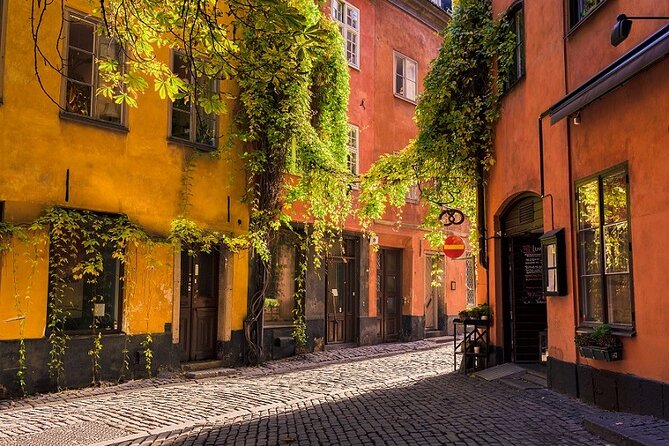
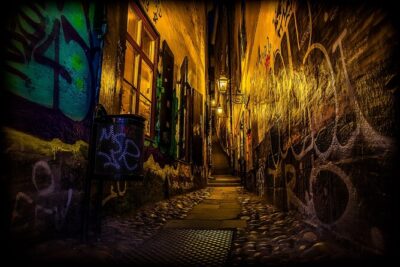
Then you reach Mårten Trotzigs Gränd, one of those places that makes you stop without trying. It’s a narrow alley in the middle of the city, with a history reaching back to the 1500s, when it was purchased by a German merchant, and it was later revived and preserved in the 20th century.
The practical detail: the alley includes 36 steps. It’s short, but you feel it. This is the portion where good footwear really pays off, especially if you’re visiting in colder months when cobbles can be slick.
Why it’s worth it: your guide uses the alley’s physical shape to explain the city’s resilience. You’re not just hearing facts, you’re experiencing what “old Stockholm” actually feels like under your feet.
German churches and Viking roots in the same hour
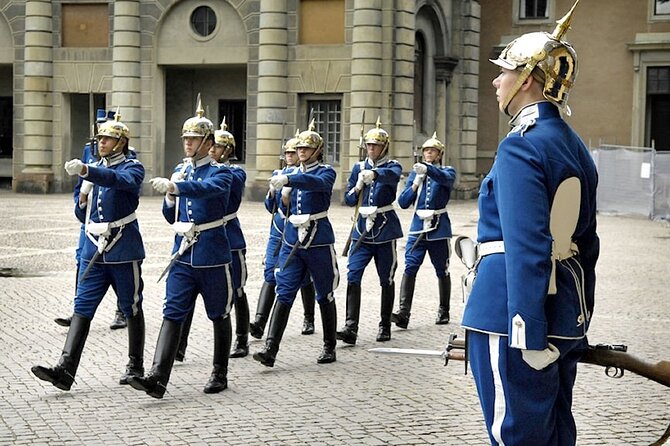
After the alley, the tour moves into two very different but equally fascinating layers.
First, you visit S:ta Gertrud (Tyska kyrkan), the parish connected to the German-speaking community outside Germany. Your guide explains how King Johan III granted the Germans the right to form their own congregation in 1571, and how by 1607 they gained exclusive rights related to an earlier shared church cottage. This is the kind of history that makes Stockholm feel international, even centuries back.
Second, you stop at Runsten (Rune Stone U 53), a runestone that connects modern Stockholm with Viking roots. The point is not just that it’s ancient. It’s that preservation keeps that bridge intact, so the city still carries its older language and symbolism.
These stops are quick, but they change how you see the streets. You start noticing that “old” Stockholm wasn’t one single culture. It was a set of communities leaving marks that still show up today.
Nobel Prize Museum area, Stortorget, and the medieval core
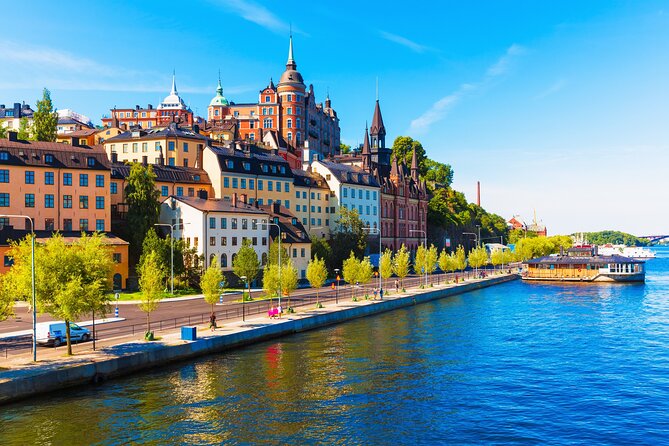
The route then reaches the area tied to the Nobel Prize Museum, located in the historic Stock Exchange Building. The museum opened in 2001, aligned with the Nobel Prize’s 100th anniversary. Even if you’re not going inside, this stop adds a modern Swedish identity that sits right on top of older stone and civic buildings.
From there you head toward Stortorget, Stockholm’s oldest square. Your guide explains the infamous Stockholm Bloodbath from November 7 to 9, 1520. You also get architecture highlights around the square, plus small storytelling details like the cannonball restaurant legend at Stortorgs Källaren, and the ABBA photo link at Stortorgsbrunnen taken in 1976.
I like this segment because you get three timelines in one place:
- medieval power and violence (Bloodbath)
- merchant and civic buildings (the square’s surrounding architecture)
- pop culture footprint (the ABBA photograph connection)
And the guide keeps it understandable, not a history lecture. It helps you imagine what Stortorget looks like when it’s full and lively, not just when you’re passing through.
Saint George and the Dragon, plus tiny symbols you’ll remember
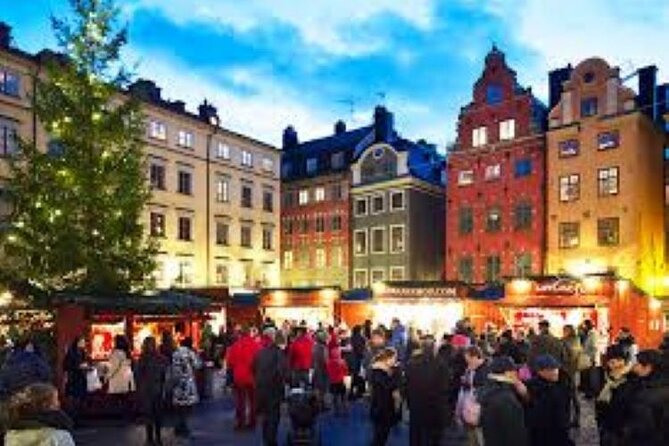
In the Stockholm Cathedral area, you’ll hear about Saint George and the Dragon, a celebrated medieval sculpture. The guide explains the legend of Saint George and the dragon, and the story connects to courage and victory themes.
You also learn that the original wooden sculpture arrived in 1489 and that art historians widely believe it was commissioned by Sten Sture the Elder to commemorate his victory over the Union King Christian I at the Battle of Brunkeberg in 1471. The sculpture becomes a symbolic shortcut for big political meaning, delivered through art.
Then comes a fun contrast: Jarnpojken, the Iron Boy. It’s tiny, but it leaves a strong impression because it invites participation. People leave coins, pat its head, and even knit winter garments. Your guide uses these rituals to explain how small acts become part of local identity.
If you only like big monuments, the Iron Boy might seem too small. But if you enjoy quirky local culture, this stop is a win. It’s also a great place to reset your brain mid-walk.
Finnish Church and the way Stockholm adapts
Next is the Finnish Church (Finska kyrkan), which your guide frames as a story of adaptation. The church’s path includes a past where it was a royal tennis court, then later became a cherished place of worship.
The takeaway here is about community life. This stop helps you see Stockholm as a city that absorbs different groups and changes functions over time, instead of treating only the grand royal buildings as meaningful.
It’s also a relief if you’ve been mentally sprinting through names and dates. The guide connects these pieces with everyday human needs, faith, and belonging.
Royal Palace area: statues, meaning, and what you do not enter
When you reach the Royal Palace, the guide gives you a historical and architectural overview. The palace traces back to the medieval castle complex called Tre Kronor (Three Crowns), and your guide points out key interior elements such as the Hall of State, the Royal Chapel, and Gustav III’s Museum of Antiquities.
Important practical point: the tour does not include entry. Your time is an exterior and orientation stop, plus explanations of significance. The same is true for the way your guide talks about statues like Karl XIV Johan, Gustav III, Olaus Petri (Master Olof), and Kristina Gyllenstjerna.
One detail that helps you picture the present: in 1981, the Royal Family moved to Drottningholm Palace as their private residence. So you hear why the palace has both ceremonial and practical layers, and why Stockholm can feel royal without being locked in the past.
Riddarholmen, Riddarhuset, and Bondeska Palace: power with a purpose
The next segment moves to Riddarholmen, an island where the Grey Friars Monastery began its transformation into a significant historical site in the 1200s. After the Tre Kronor castle fire in 1697, state agencies and courts gradually took over the island, turning it into a legal and administrative hub.
You’ll also see landmarks such as Riddarholm Church and a statue connected to Evert Taube. Your guide’s job here is to connect medieval and early modern function, so the area becomes more than architecture.
Then you move to the Riddarhuset, the House of Nobility Palace built between 1641 and 1674, owned and managed by Sweden’s knighthood and nobility. After that, you pass Bondeska Palace, home of the Supreme Court, framed by your guide as a judicial symbol.
The payoff for you: it becomes obvious how Sweden’s power structures used buildings like this, not just systems on paper. You walk past institutions and learn why they were located where they are.
Riksdagshuset and Rosenbad: modern government you can recognize at street level
Next is Riksdagshuset, the Swedish Parliament seat (Riksdag). Your guide explains that the complex was constructed between 1895 and 1904, originally including a building for Sveriges Riksbank. In 1971, the parliamentary system became unicameral, and your guide explains how the old bank section was transformed to accommodate the plenary space, with later renovations allowing access to the older parts.
You also hear about the statue titled The Homeless Fox on the premises. The guide also ties the location to Greta Tunberg, as part of the building’s public-facing cultural connection.
Then you see Rosenbad, the seat of the Swedish government. Your guide describes it as the nerve center where policy is crafted, connecting the everyday street-level architecture with the big national work happening inside.
This section is great because it helps you feel oriented. After this, you can walk through Stockholm and recognize what’s political versus what’s historical versus what’s just beautiful.
Stockholm City Hall finish: Blue Hall, Golden Hall, and why the building matters
The tour ends at Stockholm City Hall, where your guide points out the mix of Italian Renaissance and Nordic Gothic influences, plus National Romantic style. This is one of those buildings that people remember even if they don’t know why.
You’ll hear about famous interiors like the Blue Hall and Golden Hall, which host major events like the Nobel Banquet. Even without entry during this walk, your guide makes the building’s symbolism clear, especially as it relates to Sweden’s public identity.
The end point also works practically. You finish in a central, well-known zone where it’s easier to plan your next move, whether you want more museums, a meal, or a longer stroll along the waterfront.
And because the guides give local advice for good cafes and restaurants, you leave knowing what to do next, not just what you saw.
Price and value: what $66.52 buys you on foot
At about $66.52 per person for roughly three hours, this tour is priced like a solid city introduction rather than a heavy-ticket attraction package. Most stops are quick looks at important places, and the tour notes that attractions are not being entered.
So the value comes from three things:
1) an organized route that saves you time finding the best corners
2) explanations that connect architecture, names, and Swedish history into one story
3) local tips from your guide for where to eat and what to do after
It’s a good deal if you want a smart first day that gives you momentum. It’s less ideal if you want museum entry included in the same price. If your priority list includes the Nobel Prize Museum, the Royal Palace interiors, or other inside-the-door experiences, you will need to plan those separately.
Should you book this Classic Stockholm Small Group Walking Tour?
Yes, if you want an efficient, human-scale way to learn Stockholm’s story in three hours, and you like asking questions while you walk. This is especially a good match if you’re new to the city, because the route gives you a clear mental map from Slussen and Södermalm down into Gamla Stan, then across into royal and government Stockholm.
Book it early if you can, since it’s commonly reserved about six weeks out. Bring comfortable shoes, expect some cobblestones, and don’t assume you’ll enter major sites, because the tour is designed for views, orientation, and context.
If your dream Stockholm day is part history, part street atmosphere, and part “where should I eat next,” this is a strong pick.
FAQ
How long is the Classic Stockholm Small Group Walking Tour?
It runs for about 3 hours.
What language is the tour offered in?
The tour is offered in English.
Where does the tour start, and how do I find the meeting point?
You start at Götgatan 1, 116 46 Stockholm, Sweden, at the east entrance of the Stockholm City Museum. The team sends an email with detailed instructions before the tour starts, including a phone number if you have trouble finding the guide.
Is the tour all walking, and what fitness level do I need?
You should have a moderate physical fitness level. It includes walking on cobblestones, and there is at least one stop with stairs.
Are museum and attraction entry tickets included?
No. Admission fees for museums or other special sites are not included, and the tour does not enter the attractions.
Can I cancel for a full refund?
Yes. Free cancellation is available up to 24 hours in advance for a full refund. If you cancel less than 24 hours before the start time, the amount you paid is not refunded.
Just listed in Stockholm
- Stockholm: Old Town by Locals + Exclusive Souvenir Poster★ 5.0 · 4 reviews
- 3 Hours Guided Shopping Tour in Stockholm Thrifting Stores★ 5.0 · 4 reviews
- Icebathing and Sauna in Stockholm nature★ 5.0 · 4 reviews
- Central Stockholm: A Self-Guided Audio Tour in the Modern City★ 5.0 · 4 reviews
- World War II Stockholm Old Town Walking Tour and Army Museum★ 4.6 · 4 reviews
- Stockholm Jogging Tour★ 3.9 · 6 reviews
- Stockholm: Hike, Forest Lunch, and Cold-Water Floating★ 4.9 · 8 reviews
- Wolf and Wildlife Tracking in Sweden★ 5.0 · 9 reviews
Walking Tours, compared.
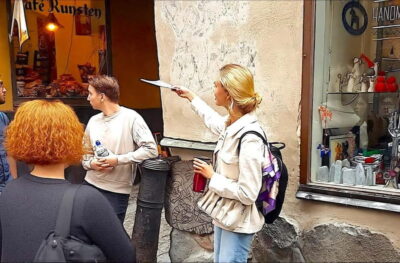
Stockholm Gamla Stan: Old Town Walking Tour with Local Guide
Read our review →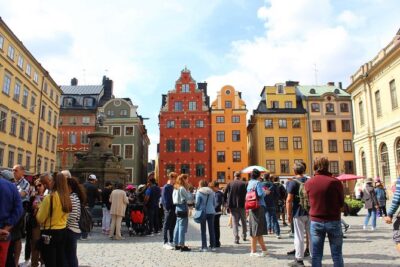

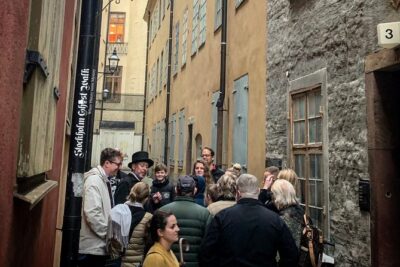
The Original Stockholm Ghost Walk and Historical Tour – Gamla Stan
Read our review →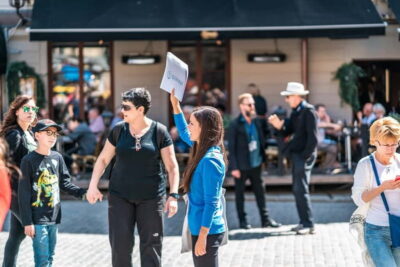
Best of Stockholm Walking Tour-3 Hours, Small Group max 10 people
Read our review →
Browse the lists this tour appears in