
Reviewed · OLD TOWN (GAMLA STAN)
Private blood, ghosts and folklore Old Town 2h Stockholm tour
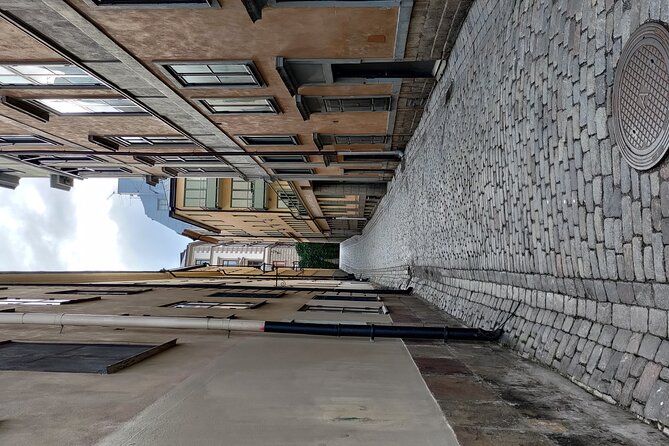
Stockholm has a talent for turning ordinary street corners into dark little theaters. This private ghost-themed walk threads through Old Town with stories about blood, protection charms, and the supernatural rules people used to fear at night. You get the walking part handled, plus time to ask questions as you go.
I especially like how the guide connects specific places to the folklore people told about them, from execution history near Stortorget to the water spirits around Logårdstrappan. I also like the pacing: it is short stops, clear focus, and you are not stuck in a lecture for the whole 90 minutes. One drawback to consider is that the tone can feel more like folklore storytelling and “how protection worked” than nonstop gore.
Key points to know before you go
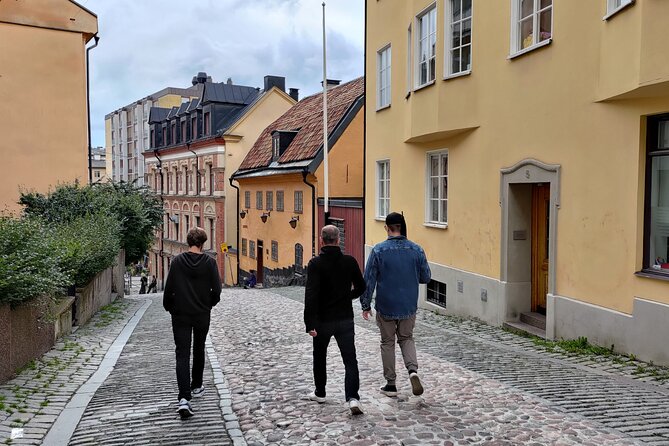
- Private group, private questions as you walk, so you can steer what you want to understand.
- Six tight stops around Old Town, with short story moments at each landmark.
- Folklore protection themes, including iron, door rites, baptism, and warding against vaesen.
- Water-spirit spotlight at Logårdstrappan, with creatures that lure people toward deep water.
- Ends near Kungsträdgården, so you can roll right into a stroll afterward.
- Admission-free stops, so your cost goes to the guide and the experience, not ticket hunting.
A 90-minute Private Walk Through Stortorget and S:t Jacobs Kyrka
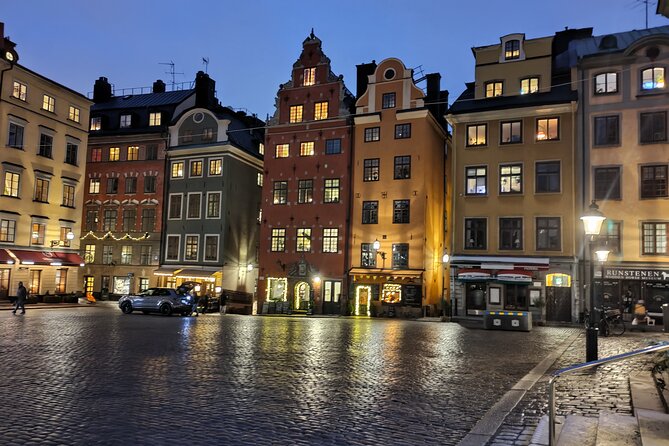
This is a 1 hour 30 minutes private tour, built for a simple goal: you want the dark side of Stockholm without spending hours reading. You start at Nobel Prize Museum, Stortorget 2, and finish outside Old Town near Saint Jacob’s Church, with the route ending by Kungsträdgården. The total time lines up with six stops, plus walking between them.
It is also a good format if you like structure. Instead of wandering and hoping you bump into the right story, the guide takes you from one named place to the next, with a reason for each stop. That matters for Old Town, where you can easily spend time just finding your way.
The private setup is the real selling point. This is not a big group shuffle, and it helps the stories land better. If you want to ask what a particular creature name means, or why iron shows up again and again, you can.
One practical note: the tour is outdoors for most of the time, and you will be on your feet while the guide explains at each stop. Plan for walking shoes and a jacket if weather turns.
Other walks through Gamla Stan:
- Stockholm Gamla Stan: Old Town Walking Tour with Local Guide
★ 4.7 · 1,714 reviews - Walking Tour of Stockholm Old Town
★ 5.0 · 1,175 reviews - The Original Stockholm Ghost Walk and Historical Tour – Gamla Stan
★ 4.5 · 1,165 reviews
What This Tour Really Covers: Blood, Iron, and Vaesen Rules
If you are picturing a spooky parade of haunted rooms, this tour leans a different way. The “blood and ghosts” angle is here, but the core theme is folklore thinking, how people imagined danger, and the rituals they believed could keep them safe.
A lot of the stories circle around one big idea: the supernatural was not random. It followed rules. You warded against it with objects like iron. You handled vulnerable moments, like a newborn before baptism. You treated doors as boundaries between safe life and whatever crept in from outside.
That is why this tour feels smart rather than just scary. You leave with a sense of how Swedish folklore tried to explain the unknown. The creatures have different jobs, but the logic repeats, protect the threshold, protect the body, and be careful around water and darkness.
It also means the tour can feel “story-dense.” Each stop is short, but the guide packs in meanings. You will likely come away thinking about iron, blood, and doors in a way you did not before.
Stop-by-Stop: Stortorget to Prästgatan and the Road to “Hell”
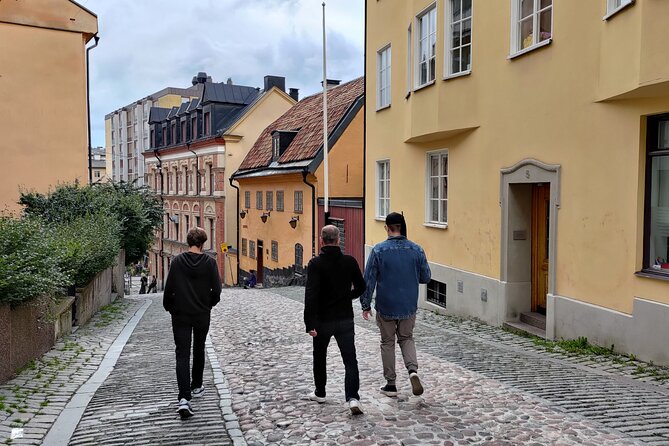
The first stop is Stortorget, a square that already feels dramatic when you stand in it. Here the focus is death and the folklore idea of magical body parts. You hear about the executions of around 90 souls when Danish King Kristian took Stockholm, which gives the stories a real historical anchor.
Then the guide shifts from facts to belief. People in folklore used blood of the dead for curses, and you hear about gallow parts and other remains as ingredients for tales and darker magic. Even if you do not buy the supernatural parts, the way the stories use human tragedy makes the history hit harder.
Next you move to Prästgatan, where the street’s former name matters. The guide connects it to the idea of Hell and the place where the excursionist lived. It is a quick stop, but it sets up a pattern you see throughout the tour: the city’s past names become story prompts.
For me, this early segment works because it gives you two lenses at once. You get the political violence and you also get the folklore language people used to make sense of fear. If you are hoping for slow, long haunted legends, you might find the first two stops a bit punchy, but the pace makes the whole walk feel manageable.
Old Town Door Rites: Iron Against Elves, Tomte, and Trolls
The tour enters the deeper Old Town area with a focus on household protection, not just ghostly sightings. At the door of a house, you hear about using iron as protection against vaesen, supernatural beings that could harm people. That idea repeats across Scandinavian folklore, and the tour treats it as practical magic, not just spooky decoration.
You also get the elves with mist angle, where the mist carries souls that do not rest. That theme is useful because it explains why supernatural stories often attach themselves to weather and movement. Mist is everywhere near water and older streets, so it becomes a perfect storytelling tool.
The Swedish Tomte comes up too. You hear about how this creature fits into the broader folklore picture. Then the tour moves to one of the most striking ideas on the route: the newborn before baptism lacking protection against trolls and the Devil. The guide frames baptism as a protective moment, not only a religious one, and you learn what protection measures people believed they could use.
This stop can be a highlight if you like folklore that has rules. It is also a good place to ask questions because the guide can explain how these protective ideas connect across creatures and situations. If you want “what do they actually believe?” this is where you start getting answers.
A few more Stockholm outings lined up together
- Stockholm: ABBA The Museum Entrance Ticket
★ 4.7 · 11,280 reviews - Stockholm: City Archipelago Sightseeing Cruise with Guide
★ 4.3 · 10,798 reviews - Stockholm: Skansen Open-Air Museum Admission Ticket
★ 4.5 · 3,427 reviews - Stockholm: Hop-On Hop-Off Bus or Boat Option
★ 4.0 · 3,260 reviews
Logårdstrappan and the Water Vaesen That Lure People In
At Logårdstrappan, the atmosphere changes from house protection to danger from the environment. The guide focuses on vaesen connected to water, and it is one of the most memorable themes on the route because water feels close by even when you are not staring at the sea.
This is where you hear about Näcken, the bäckahästen, Sjörå, and the skepps-rå. The tour connects them to the idea of luring people and trying to drown them. You also get the comparison that bäckahästen is the Swedish version of Kelpie, which helps you place it if you already know Irish or Scottish water-spirit stories.
What I like about this stop is how it makes folklore feel like early risk awareness. People see water and think, falls happen, ice is treacherous, and currents can pull you under. Folklore adds a face to that fear. Even if you treat the creatures as myth, you understand why they showed up so often.
It also gives you a nice variety break. The earlier stops deal with blood, dead bodies, iron, and doors. This one makes you look outward, toward what the city’s water could do if you ignored it.
Kungsträdgården’s Creatures: Huldran, Myrling, and Blood-Sucking Fear
Kungsträdgården is not just a transition point here. It is another story engine, and the guide uses it to broaden the roster of supernatural beings beyond the water category.
You hear about Skogsrået and the huldran, with the focus on dangerous forest lore. The guide also brings in the Myrling, described as an undead living child, plus other creatures tied to sucking blood and spreading death.
This part can land differently depending on what you were expecting. If you came for a “ghost hunt” vibe, you might find that some of the scariest content is described through myth logic rather than theatrical haunting. Still, the stories are vivid, and the names are memorable, which helps you recall them later as you walk back through the city on your own.
For me, the value here is that it expands your picture of Swedish folklore. It is not only about one ghost story. It is a whole ecosystem of fear and warnings, mapped onto nature and daily life.
Outside S:t Jacobs Kyrka: Baptism Exorcism and the Weak Points of a Door
The final stop is S:t Jacobs Kyrka, with the guide speaking outside the church. The theme is doors and boundaries again, but now the door is the church door, which the guide treats as a weak point you must understand.
You hear about exorcism of a kid at baptism, plus what people believed you could do if you had a worst enemy to punish. This is one of those stops that can feel uncomfortable for modern ears, but it explains how folklore and religion sometimes mixed. Baptism, doors, and protection all tie together.
The practical takeaway is simple. In this folklore world, the places where humans make choices, like entering a church or welcoming a child, were also places where protection mattered. The stories treat those moments like checkpoints, and you learn how the beliefs worked to keep evil at bay.
If you are the type who likes to connect the dots between buildings and belief, this is a strong finish. It also sets you up nicely for exploring the area afterward because you now know what to look for, doorways, thresholds, and symbolic boundaries.
Price and Value: Is $188.16 Per Person Worth It?
At $188.16 per person, this is not a budget ghost walk. But private tours often work like this: you pay for convenience, for a guide who can tailor questions, and for not losing time.
Here, the value math is about focus. You have 90 minutes, six stops, and each one is admission-free for you, meaning you are paying for guided storytelling, not entry fees. The guide also handles navigating through Old Town, which is a real cost in your time if you tried to do this on your own.
Booking it about 14 days in advance on average also suggests it is not always available at the moment you decide. If you are traveling in busy weeks, plan ahead so you are not stuck settling for a different day.
The main question is what kind of experience you want. If you want long, gruesome, nonstop ghost theater, you might feel let down by the short stop format and the broader folklore emphasis. If you want a guided walk that explains how Swedish folklore worked, where fear lived, and why iron and doors mattered, the price can feel fair.
My advice: treat this as a folklore primer with spooky edges, not a horror show.
How the Two Story Styles May Feel Different
The route is designed to keep moving, and each stop has a clear theme. That is great if you like momentum. It can feel lighter if what you want is heavy, long, graphic legends with lots of haunting atmosphere.
So I would set expectations like this: you will get a guided selection of dark stories, lots of names, and a recurring “protection logic.” You will not get a single continuous narrative where every minute is gruesome.
This is also why asking questions is a key part of the experience. If something sounds confusing, you can push for clarification. If you want more horror tone, you can ask for it, as long as the guide stays within what they planned.
In short, this tour suits curiosity more than pure adrenaline.
Who This Tour Fits Best (and Who Might Want Something Else)
You will probably love this tour if you like folklore, you enjoy learning how myths connect to real places, and you want a guide to answer your questions on the spot. It is also a good fit if you want a manageable 90-minute hit while staying in the center of Stockholm.
It is a solid choice for couples, small groups, or solo travelers who want privacy but do not want to plan a self-guided route line by line. The meeting point near Nobel Prize Museum is easy to reach if you are already walking that part of town.
On the other hand, if you came only for a name-brand ghost story, like one famous haunting carried through the whole walk, you might want a different type of tour. The emphasis here is how folklore people imagined threats and used protection, so the “what happens” can vary in intensity from stop to stop.
If you are sensitive to dark themes, it is still worth knowing the content includes death history and references to punishment. That does not mean it is gory, but it does go to heavy places.
FAQ
How long is the private blood, ghosts and folklore Old Town tour?
The tour lasts about 1 hour 30 minutes.
What does the tour include?
It includes a guide.
Where does the tour start and end?
The start is Nobel Prize Museum, Stortorget 2, 103 16 Stockholm, Sweden. It ends just outside Old Town on the north side beside Kungsträdgården, at Saint Jacob’s Church, Västra Trädgårdsgatan 2A, 111 53 Stockholm.
Is this a private tour?
Yes. It is private, and only your group will participate.
How much does it cost?
The price is listed as $188.16 per person.
Are tickets required for the stops?
The tour information lists admission ticket free for the stops.
Do I get a mobile ticket?
Yes. The tour uses a mobile ticket.
What is the cancellation policy?
Free cancellation is available up to 24 hours in advance for a full refund. If you cancel less than 24 hours before the start time, the amount paid is not refunded.
Is it easy to get to using public transportation, and are service animals allowed?
It is near public transportation, and service animals are allowed. Most travelers can participate.
Should You Book This Private Blood, Ghosts, and Folklore Tour?
Book it if you want a guided, private Old Town walk focused on Swedish folklore themes, especially protection routines linked to places like Stortorget, doorways in the Old Town, and the water-spirits around Logårdstrappan. I think it is a smart way to learn faster than reading on your own, because the guide connects story logic to specific landmarks.
Skip it or consider a different style if you want nonstop, long-form haunting drama. This tour moves quickly and keeps returning to how people believed they could ward off danger, so the experience is more folklore education with spooky edges than a constant horror show.
Just listed in Stockholm
- Stockholm: Old Town by Locals + Exclusive Souvenir Poster★ 5.0 · 4 reviews
- 3 Hours Guided Shopping Tour in Stockholm Thrifting Stores★ 5.0 · 4 reviews
- Icebathing and Sauna in Stockholm nature★ 5.0 · 4 reviews
- Central Stockholm: A Self-Guided Audio Tour in the Modern City★ 5.0 · 4 reviews
- World War II Stockholm Old Town Walking Tour and Army Museum★ 4.6 · 4 reviews
- Stockholm Jogging Tour★ 3.9 · 6 reviews
- Wolf and Wildlife Tracking in Sweden★ 5.0 · 9 reviews
- Stockholm: Hike, Forest Lunch, and Cold-Water Floating★ 4.9 · 8 reviews
Old Town (Gamla Stan), compared.
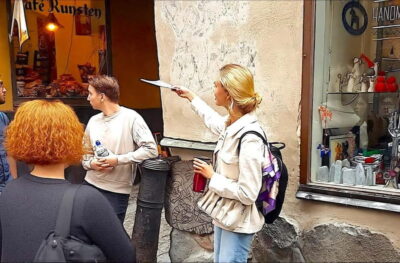
Stockholm Gamla Stan: Old Town Walking Tour with Local Guide
Read our review →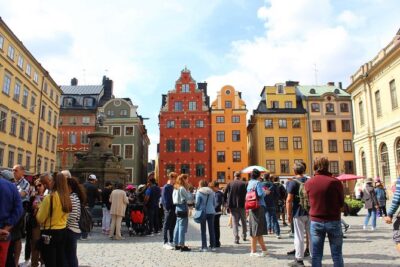
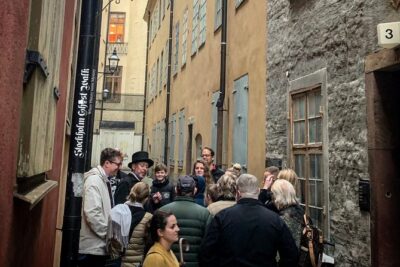
The Original Stockholm Ghost Walk and Historical Tour – Gamla Stan
Read our review →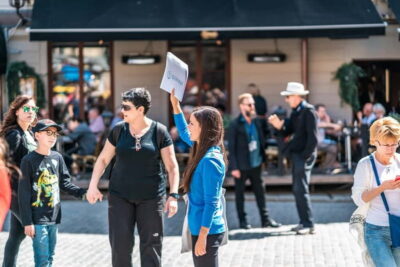
Guided Historic Old Town Walking Tour with Local
Read our review →
Walking Tour of Stockholm’s Old Town, Gamla Stan
Read our review →
Browse the lists this tour appears in