
Reviewed · AUDIO TOURS
Self Guided Tours Stockholm With 100 Captivating Audio Stories
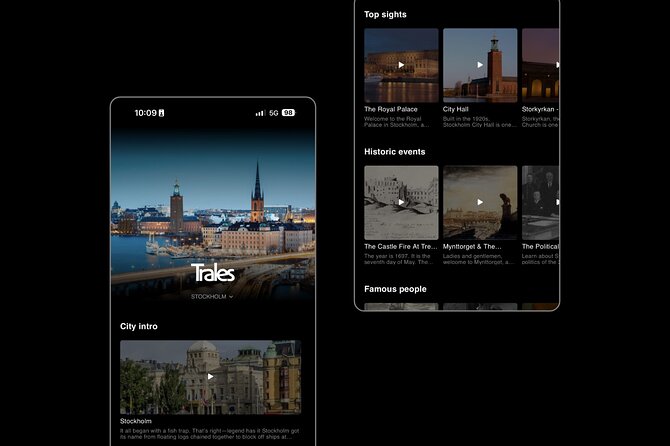
This self-guided Stockholm audio tour works because it turns big-name sights into short location-based stories you can trigger right where you are. I like that you do not need a complicated app setup, just a smartphone and a browser. I also like the freedom built in, you can start, pause, and jump in and out as your day allows.
One thing to watch: the whole experience depends on internet access, and the “1 hour” option is short. If you get delayed before your first stop, you can run out of time quickly.
Key highlights worth planning around
- Browser-based, no download: activate with a link and press play on the spot
- 100 audio stories idea: short stops focused on sights, events, and famous people
- Start and stop on your schedule: no strict pacing forced on you
- Mostly outdoor, free-to-access stops: you can hear stories without paying entry fees
- Soundscapes and storytelling style: audio geared toward walking and looking at details
- Private group setup: only your group uses the tour
Price and What You Really Get for about $3.62
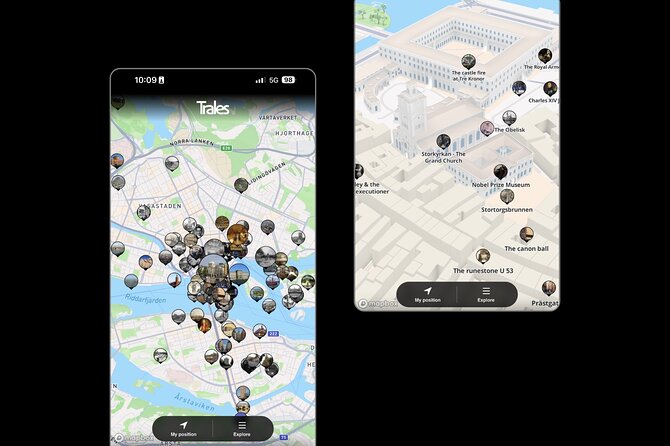
At about $3.62 per person, this is priced like an add-on, not a full-on guided tour. What you get is an app-style experience via a web app with a map, plus a one-step link to activate your mobile ticket and start the stories.
Value is strongest if you want to wander at your own speed through multiple neighborhoods. Many stops are marked as admission ticket free, meaning the audio is designed for places you can reach without paying to enter a museum or pay a site ticket just to enjoy the narration.
It is also good for short trips. The time range is listed as 1 hour to 1 day (approx.), so you can choose a quick hit of key sights or keep going for longer.
More Self-Guided Tours in Stockholm
- Stockholm: Royal Bridges & Canal Boat Tour with Audio Guide
★ 4.1 · 1,083 reviews - Stockholm: Self Guided Kayak Adventure in Nature Reserve
★ 5.0 · 69 reviews - Stockholm: Old Town Self-Guided Tour Learn and solve Puzzles
★ 4.1 · 64 reviews
Phone Ticket, Browser Map, and How the Audio Walk Flows
The core setup is refreshingly simple: you use your smartphone with internet access and your own headphones. There is no offline access, and there is no physical guide meeting you in person. You also will not be doing long downloads before you leave.
What makes this practical is that you are not locked into a route. The tour is location-based, and the experience is set up so you can start and stop at any time, at any place, then continue when you are ready.
Real-world tip: start the moment you are at (or near) your first pin. One review calls out how a tight 60-minute choice can feel painful if you are not activated and ready before you reach the first stop. So, if you pick the short option, treat setup time like part of the tour.
1 Hour vs 1 Day: Choosing the Right Window in Stockholm
Because most stops are around 10 minutes, the “1 hour” option is best for roughly five or six story locations, give or take. You will feel good doing that in a walkable pocket like Gamla Stan, around central squares, or along a waterfront stretch.
If you want to stitch together multiple neighborhoods, pick the longer window. The longer choice gives you room for what Stockholm does best: you look up, you stop for photos, you detour into a side street because something caught your eye.
If you are traveling with anyone who likes to linger at views or churches, plan longer. Short passes work, but only if you keep moving between pins.
Old Town First: Stortorget, Narrow Alleys, Churches, and Runestones
Gamla Stan is where Stockholm story-telling shines, and this route leans into the details. You will hear about squares, street names, medieval layers, and the human scale of the Old Town.
You start with Stortorget in Gamla Stan, described as one of the most picturesque and lively squares, famous for colorful buildings and its role in the city’s history. This is a strong “first listen” stop because it anchors you in what Old Town looks like, right away.
Then you can move to Järntorget, the “Iron Square,” with a reminder of the iron industry that was present here until 1662. Street-name stories like this help you read the city instead of just passing it.
After that, the audio heads toward the grand stuff, like the Royal Palace. The narration points out the current palace built in the 18th century, plus the fact it has 1,430 rooms with 660 windows, which is a fun number to keep in mind when you are looking at the building outside.
A must for the “wow, that is tight” moment is Mårten Trotzigs Alley. The story highlights how narrow it is at about 90 centimeters at the tightest point. If you want a simple challenge, try walking through while picturing both sides pressing in.
You also get grounded in the quieter, older Stockholm through spots like:
- Stortorgsbrunnen, which served as a kind of zero point for distances and also relates to water supply for Gamla Stan.
- Prästgatan, one of the oldest streets, where history is literally in the street fabric.
- Upplands runinskrifter 53, where a runestone is embedded into a building foundation. It is a neat “look down” stop that most people skip.
Churches in this route are treated like time machines. Storkyrkan is described as one of Stockholm’s oldest and most significant churches, with a Baroque exterior and a Gothic interior, plus a 66-meter tower that shapes the skyline. Nearby, Riddarholmen Church is presented as the final resting place of many Swedish monarchs, built as a monastery and later converted after the Protestant Reformation.
And for a classic Old Town vibe break, you can add the story stop at Den Gyldene Freden, described as one of the world’s oldest continuously operating restaurants in the same location since 1722.
A few more Stockholm outings lined up together
- Stockholm: Self Guided Kayak Adventure
★ 4.5 · 55 reviews - Stockholm: Self-Guided hiking in beautiful nature
★ 4.6 · 43 reviews - Stockholm Walking Tour with Audioguide on Your Smartphone
★ 4.5 · 27 reviews - 3-Day Self-guided Kayak Weekend Tour
★ 5.0 · 22 reviews
Royal, Civic, and Cultural Stockholm: Palace, Opera, City Hall, and the Library

Stockholm does not keep its “power buildings” hidden. This route includes the obvious icons and also uses audio to give you context so you understand what you are looking at.
Stockholm City Hall is flagged for its tall tower and the view from above. The narration adds a practical historical note: it took more than 12 years to build, and the design was chosen via a competition among major Swedish architects.
If your trip has even one “big architecture” day, this is where it pays off. You will stop thinking “pretty building” and start thinking “who decided, who designed, and why it looks like this.”
The route also includes The Royal Swedish Opera, with a helpful correction in the audio: it is not the original opera house. That kind of story detail is gold because it keeps your visit from being just one more exterior photo.
For a quieter, brainy pause, National Library is listed with a huge scale: over 18 million objects across books, posters, pictures, manuscripts, and newspapers. Even if you do not go inside anywhere, the audio framing makes the building feel purposeful, not just academic.
Södermalm Walks: Slussen, Katarina Elevator, SoFo, Courts, and View Points
Södermalm is where you go for angles and variety, and this route builds a path that mixes engineering, culture, and day-to-day city life.
Start with Slussen, where construction is creating chaos, and the audio notes costs reportedly increasing by 264 percent, with completion postponed to 2025. Even if you just stand nearby, the story helps you understand why the area feels like it is in motion.
For something unique, Katarina Elevator is a highlight. The narration explains it reaches 38 meters, with the first elevator inaugurated in 1883, and it was designed to help people move on the hilly parts of Södermalm. It is also connected to an idea of linking the city garden and Mosebacke Square.
Then you can drift toward the creative core with SoFo & Medborgarplatsen, described as the heart of creative Stockholm in the area locals call SoFo. This is one of those stops where the audio gives you neighborhood identity, so street scenes make more sense.
For history of place names and street movement, you will also pass through:
- Gotgatan, described as around since medieval times, possibly earlier.
- Stockholms tingsrätt, focusing on the court house with hints of architecture and a fiery past.
- Skrapan, a tall building that rises above Stockholm’s skyline, with the audio centered on the building’s tales.
If you want a church-and-street combo, Katarina kyrka is part of the path, with the story emphasizing resilience through time and fire.
And for a relaxing break after all that walking, Rålambshovsparken is framed as a time-and-art park you can explore under bridges and pathways.
Islands and Water Views: Djurgården, Fortresses, Bridges, and Waterfront Streets
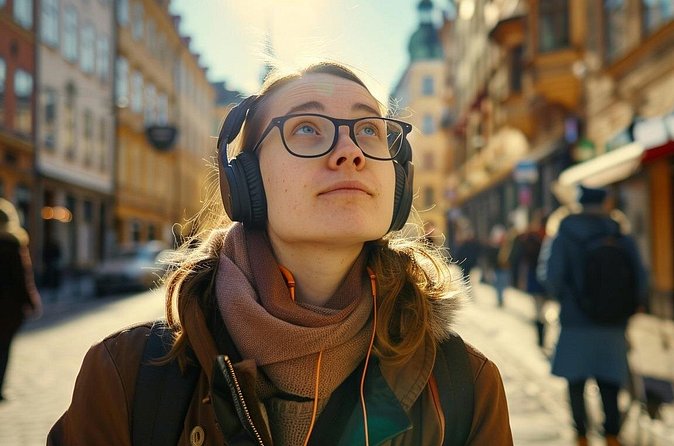
Stockholm rewards water-side walking, and this route spreads you across islands and crossings so you get more than just one view type.
On the island side, Djurgården appears as a stop and is described as part of the Royal National City Park, a green oasis with ancient oaks. Add Djurgårdsbron, explained as the bridge that connects the mainland to Djurgården, built for the Stockholm World’s Fair in 1897.
Across the water, Kastellholmen is presented as Fortress Island with a well-preserved fortress, right opposite Gamla Stan. The route also includes Skeppsholmen, a former navy central point now turned into a cultural hub with museums, galleries, restaurants, and events.
If you want something smaller and quieter, Reimersholme is described as a small picturesque island with views and a serene atmosphere. Strömsborg is another island stop, introduced as one of the oldest inhabited islands, with origins dating to the 13th century and a variety of owners and uses.
For a distinct waterfront sweep, Norr Mälarstrand is a listed stop framed as stepping into the past of the waterfront. Alongside, Strandvägen is called a prestigious waterfront street finished for the Stockholm World’s Fair in 1897, which makes it an easy “photo + audio” combo.
If your day includes bridges, you also have Skansbron, plus Skanstullsbron, both positioned as part of Stockholm’s city-meets-nature feel and as engineering connections.
Parks, Food, Shopping, and Modern Squares
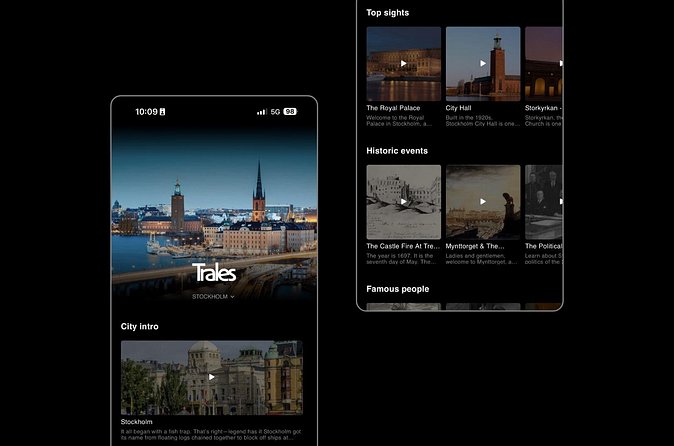
Stockholm is not only monuments. This route includes green breaks and everyday anchors so your day does not feel like a museum line.
At Berzelii Park, the audio is about naming and creation. It starts in 1852, guided by Knut Malte Forsberg, and opened on July 13, 1858. It is a great “sit for a minute” story because the narration gives you a timeline while you look around.
For food lovers, Östermalms Food Hall (Östermalmshallen) is included with the hall opening in 1889. Even if you just snack, the story sets the building in time.
For luxury shopping energy, Nordiska Kompaniet (NK) is covered, including a claim of 12 million visitors each year and around 1,200 staff. That is the kind of number that makes NK feel like a major institution, not just a store.
There are also modern design stops like Sergel’s Torg, described as constructed in the 1960s with a west-to-east axis and divided into three parts. Add Kulturhuset Stadsteatern and Kungsträdgården, and you get a city-center rhythm of modern culture and public space.
For big-city transit scale, Stockholm Central Station is described with over 200,000 visitors daily, including around 170,000 travelers such as commuters and Arlanda Express passengers. It is a useful stop if you want your route to feel connected to the real flow of the city.
And if you want one “last stop” that is practical for families or rain days, Westfield Mall of Scandinavia is listed as a shopping paradise with convenience in its location.
Stop-by-Stop: What You Will Hear at Each Pin
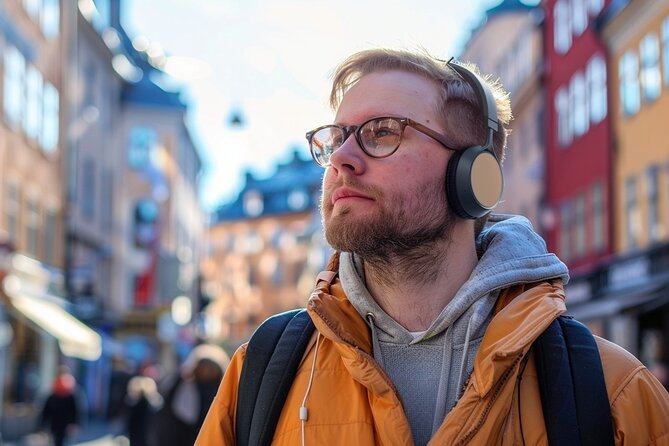
Below is the core set of locations provided, in the same order as the experience lists them. Each story is timed around 10 minutes (with at least one 20-minute stop mentioned).
- Stortorget: Colorful Old Town square, key in Stockholm’s early story.
- Järntorget: The Iron Square, with iron industry history until 1662.
- Stockholm Royal Palace: Built in the 18th century, 1,430 rooms and a hidden secret teaser.
- Mårten Trotzigs Alley: Stockholm’s narrowest alley, about 90 cm at the tightest point.
- Stockholm City Hall: 1920s civic building, long build time, tower views, architect competition.
- Berzelii Park: Named for chemist Jöns Jacob Berzelius, opened July 13, 1858.
- Djurgården: Royal National City Park island, ancient oaks and lots to look at.
- Drottninggatan: Queen’s Street, car-free shopping street, tragic events referenced.
- Östermalms Food Hall: Market hall opened in 1889, food and local life focus.
- Nordiska Kompaniet (NK): Luxury department store, huge annual visitor draw, big staff base.
- Birger Jarl’s Tower: A frequently overlooked structure, with mystery explained in the audio.
- Brunkebergstorg: Ties to the Battle of Brunkeberg on October 10, 1471.
- Den Gyldene Freden: One of the world’s oldest continuously operating restaurants, since 1722.
- Upplands runinskrifter 53: Runestone U 53 embedded in a building foundation.
- Evert Taube Terrace: View over the inlet, named for Evert Taube, Swedish troubadour.
- Old Parliament House: Franciscan-era origins, later uses including hospital, orphanage, prison.
- Jarnpojken (Iron Boy): The world’s smallest public outdoor artwork, about 15 cm.
- Kastellholmen: Fortress Island across from Gamla Stan, with a well-preserved fortress.
- The Royal Swedish Opera: Major cultural symbol, and the audio notes it is not the original opera house.
- Mårten Trotzigs Alley: This stop repeats in the set, same narrow-alley story beat.
- Obelisk at Slottsbacken: Outside Stockholm Palace, inaugurated in 1800, stone pillar shape described.
- Riddarholmen Church: Greyfriars monastery roots, converted after Reformation, monarch resting place.
- Parliament House (Riksdag building): Helgeandsholmen, classic style, inaugurated in 1904.
- Skeppsholmen: Former navy focal point turned cultural hub, museums and events.
- Slussen: Construction chaos and project timeline, with cost increase noted.
- Storkyrkan: Grand Church, donations linked to Birger Jarl, Baroque exterior, Gothic interior.
- Stortorgsbrunnen: Stortorget Fountain, once the zero point and tied to water access in Gamla Stan.
- Strömsborg: Old inhabited island with origins in the 13th century and changing uses.
- Tyska Brunnsplan: Created 1784-85 by merging two buildings, concave square space.
- S:ta Gertrud, Tyska kyrkan: 96-meter tower in the silhouette, highest point framing.
- Prästgatan: Priest Street, described as one of the oldest streets.
- Adolf Fredriks Församling: Built 1768-1774, replacing an earlier wooden chapel for Saint Olof.
- Berzelii Park: This stop appears again, same chemist naming and inauguration story.
- The Branting Monument: Hjalmar Branting tribute, large scale monument at 5 meters by 6 meters.
- Stockholm Central Station: Daily visitor and traveler numbers, a sense of the city’s transit pulse.
- Cirkus Arena: Inaugurated May 25, 1892, built for circus companies, landmark status in 1983.
- Djurgården: This stop repeats, same Royal National City Park framing.
- Djurgårdsbron: Built 1897 for the World’s Fair, bridge design credited to Carl Fraenell.
- Drottninggatan: This stop repeats, Queen’s Street shopping and event history focus.
- Hedvig Eleonora Church: Consecrated August 21, 1737, octagonal church named for the queen.
- St. Clare’s Church: Links to Klara area naming and the church’s ongoing identity.
- Kulturhuset Stadsteatern: Modernism-era culture landmark, audio focuses on the city’s evolution.
- National Library: Over 18 million objects, a map of Swedish intellectual culture.
- Kungsträdgården: King’s Garden, favorite meeting spot, cafés and people-watching.
- Norra Bantorget: Social Democratic stronghold, tied to Swedish political movement history.
- Nybrogatan: Street identity in Östermalm, mix of residences, commerce, and traces of history.
- Rosenbad: Art Nouveau design by Ferdinand Boberg, completed 1902, multiple earlier uses.
- Rosendal Palace (Rosendal’s Garden): Built 1823-1827, a retreat from formal court life.
- Sagerska huset: Prime Minister residence, described as in the heart of central Stockholm.
- Sergel’s Torg: 1960s square with an axis and three parts, designed structure you can read as you walk.
- Stockholm Olympic Stadium: Opened 1912, designed by Torben Grut, capacity noted in the story.
- Strandvägen: Waterfront street finished for the 1897 World’s Fair, prestigious address theme.
- Vanadislunden: Park in Vasastaden, framed as a calm spot to discover.
- Vasaparkens Parklek: Park with roots as Sabbatsbergsparken, linked to a manor and scientific exploration.
- Villa Lusthusporten: 19th century merchant house, also described as a gazebo gate type image.
- Prins Eugens Waldemarsudde: Waldemarsudde name explained, former home of Prince Eugen.
- Tantolunden: Park and allotment area, designed by Alfred Medin in the late 19th century.
- Reimersholme: Small island, serene pace, framed as view-focused and quiet.
- Katarina Elevator: 38 meters high, first elevator in 1883, designed for steep Södermalm movement.
- Mosebacke Torg: Square on Katarinaberget, shaped by changes after a 1857 fire.
- Langholmen: Mentions ancient settlements and that the council of state held a meeting there in 1435.
- Katarina Kyrka: Church of Catherine, story about standing up through time and fire.
- SoFo & Medborgarplatsen: Creative Stockholm identity, includes the local name and neighborhood meaning.
- Götgatan (Gotgatan): Medieval connection described, a street link across south and west Södermalm communities.
- Stockholms tingsrätt: Court house story centered on history, architecture, and past fire.
- Skrapan: The tall building called Skatteskrapan in the audio, with tales above the skyline.
- Sofia Church: Church stop on Södermalm, described as a masterpiece.
- Rålambshovsparken: Park under bridges, time-and-art themed walk.
- Norr Mälarstrand: Waterfront past story, 10-minute set-up for a longer stroll if you want.
- Solna: North of Stockholm City framing, described as an urban gem with charm and mystery.
- Kista: Story described around Nytorget as tradition and trend.
- Kungsholmen: Historic island with mystery and intrigue framing.
- Östermalm: Exclusive district with sky-high housing prices theme, secrets to uncover.
- Södermalm: Neighborhood contrasts and magic framing, bridges to new adventures.
- Vasastan: District named for King Gustav Vasa, secrets and street charm.
- Hagaparken: Green escape in Solna Municipality, lawns and hidden wonders theme.
- Solna: Solna Church described as a medieval marvel, built for worship and defense.
- Westfield Mall of Scandinavia: Shopping-focused stop, convenience in a Nordic setting.
- Nytorget: Square with a lively past theme and dark history references.
- Skanstullsbron: Bridge stop framed as city meeting nature and architectural connection.
- Folksamhuset: Insurance-history tower icon, audio story centered on its role in Swedish insurance history.
- Skansbron: Engineering and canal crossing focus, hidden marvel framing.
Who This Audio Tour Fits Best
This works best if you:
- want self-paced walking instead of a fixed group schedule
- enjoy learning from short audio stories while you look at buildings and street details
- like the idea of mixing Old Town with modern Stockholm landmarks and water views
It is less ideal if you need offline audio, since the tour does not include offline access. It is also noted as not recommended for travelers with hearing impairment.
Quick Decision: Should You Book This One?
Yes, if you want a cheap, flexible way to connect the dots across Stockholm without paying for a guide or downloading extra apps. The strongest part is the mix of story types, squares, alleys, civic buildings, churches, bridges, and islands, all handled in short stops you can manage.
I would choose the longer window if you plan to roam beyond one neighborhood. Choose the 1 hour version only if you can start it immediately and stick to a small set of pins.
If your internet access is shaky that day, reconsider. No download means no audio if your connection fails.
FAQ
Do I need to download an app to use this Stockholm audio tour?
No. You activate and access the audio guide through a web experience on your browser.
What language is the audio available in?
The tour is offered in English.
What do I need to bring?
Bring a smartphone with internet access and your own headphones. These are not included.
Does it work offline?
No. Offline access is not included.
How long should I plan for?
The experience is listed as about 1 hour to 1 day (approx.).
Can I start or stop the audio at different times?
Yes. You can start and stop your journey at any time, and at any place, using your smartphone.
Is it refundable if I cancel?
No. The experience is non-refundable and cannot be changed for any reason.
More Audio Tours in Stockholm
- Stockholm Scavenger Hunt and Highlights Self Guided Audio Tour
★ 5.0 · 6 reviews - Central Stockholm: A Self-Guided Audio Tour in the Modern City
★ 5.0 · 4 reviews - Self-Guided Audio Walking Tour Through Kurt Wallander’s Ystad
★ 3.5 · 12 reviews - Lund’s Medieval and Modern History: A Self-Guided Audio Tour
★ 4.5 · 11 reviews
Just listed in Stockholm
- Stockholm: Old Town by Locals + Exclusive Souvenir Poster★ 5.0 · 4 reviews
- 3 Hours Guided Shopping Tour in Stockholm Thrifting Stores★ 5.0 · 4 reviews
- Icebathing and Sauna in Stockholm nature★ 5.0 · 4 reviews
- Central Stockholm: A Self-Guided Audio Tour in the Modern City★ 5.0 · 4 reviews
- World War II Stockholm Old Town Walking Tour and Army Museum★ 4.6 · 4 reviews
- Stockholm Jogging Tour★ 3.9 · 6 reviews
- Wolf and Wildlife Tracking in Sweden★ 5.0 · 9 reviews
- Stockholm: Hike, Forest Lunch, and Cold-Water Floating★ 4.9 · 8 reviews
Audio Tours, compared.
Royal Bridges & Canal Boat Tour with Audio Guide
Read our review →
Self-Guided Audio Walking Tour Through Kurt Wallander’s Ystad
Read our review →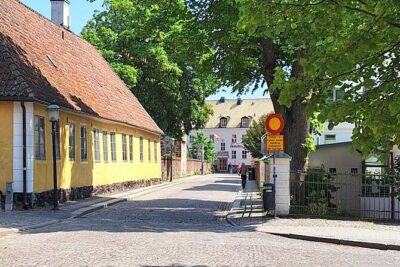
Lund’s Medieval and Modern History: A Self-Guided Audio Tour
Read our review →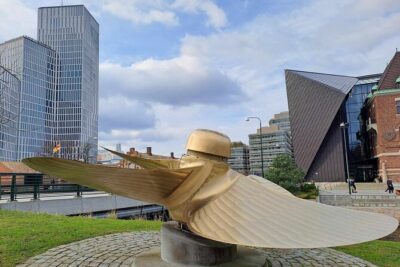
Half Day Self-Guided Audio Walking Tour in Cosmopolitan Malmö
Read our review →
Stockholm Scavenger Hunt and Highlights Self Guided Audio Tour
Read our review →Browse the lists this tour appears in