
Reviewed · CITY TOURS
Stockholm City Center: Kungsträdgården Norrmalm Guided Tour
This is the kind of Stockholm tour that feels more like a guided walk through how power works, not a checklist of big sights. I like the focus on Blasieholmen’s quieter influence behind grand facades, plus the way the route threads architecture and stories together. Even if you already know Stockholm’s postcard areas, this route gives you angles you usually miss.
Two things I really like: the small group of max 6, which means you can actually ask questions, and the warm Swedish fika stop at the National Museum to reset during winter cold. One possible drawback is timing and comfort: it is a short walk in a city center that can be windy, snowy, and sometimes uneven.
Key highlights and why they matter
- Max 6 people keeps the pace relaxed and makes room for questions
- Blasieholmen power corridors plus long-glance architecture viewing, not just photo stops
- Tändstickspalatset explained in the context of Swedish industry and design
- Kungsträdgården’s King’s Garden with fire-era history and the Karl XII statue controversy
- Skeppsholmen included for the naval thread through the city
- Fika at the National Museum gives you a warm landing point before you head off
Why this winter walk feels smarter than sticking to Gamla Stan
Stockholm gets grouped into the usual zones: Gamla Stan first, then maybe a quick detour for waterfront views. This tour works because it flips the emphasis. Instead of spending your whole time in the most crowded postcard streets, you move through Norrmalm’s central neighborhoods and connect them back to the people, institutions, and buildings that shaped modern Stockholm.
In winter, that shift matters even more. You get a compact route across central areas, while the city’s smaller streets and courtyards feel calmer. The cold also changes how you experience Stockholm: you notice details faster, and you appreciate the stops where you can warm up and breathe.
The tour has another smart ingredient: it is not only about pretty buildings. It is about how influence travels through cities, using places that kept decisions close behind doors.
Meeting at S:t Jacobs kyrka: what the start tells you about the tour
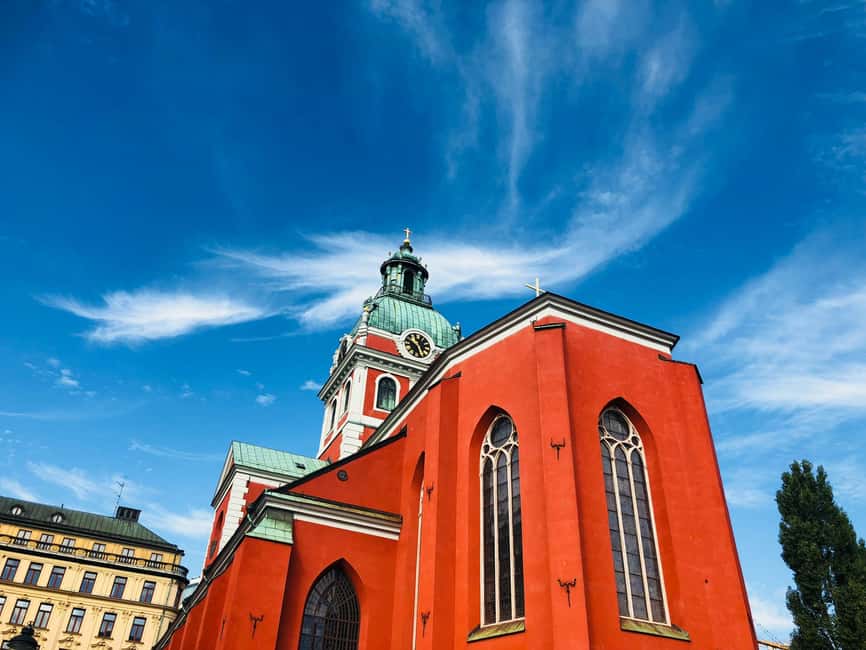
You meet outside S:t Jacobs kyrka by the street right by the red church. The address is Västra Trädgårdsgatan 2A. The guide is described as wearing black with jeans and carrying a black umbrella, which is a nice practical touch when you are scanning a winter street for your group.
From the beginning, the format signals what you are in for. The tour runs about 60 to 75 minutes, and it is designed for small group attention. That means you are not stuck listening to one-sided monologues while everyone else waits for their turn.
Also, it helps to show up ready to walk. The route includes historical areas and can include uneven surfaces, so you want footwear that feels secure when you step on icy or gritty pavement.
More City Tours in Stockholm
- Stockholm: City Archipelago Sightseeing Cruise with Guide
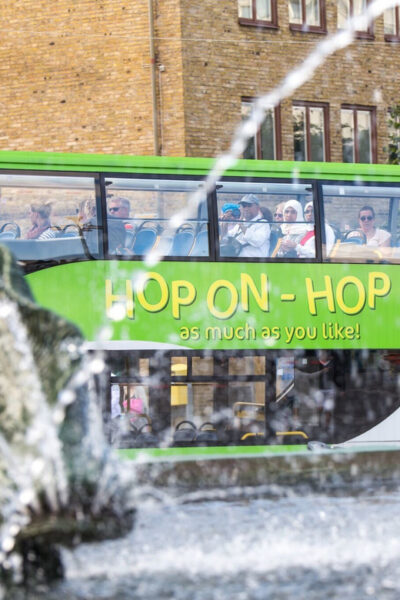
★ 4.3 · 10,798 reviews - Stockholm: City Sightseeing Hop-On Hop-Off Bus Tour
★ 3.9 · 682 reviews - Stockholm: Guided City Sightseeing Open Electric Boat Tour
★ 4.8 · 645 reviews
Blasieholmen and its “quiet power” behind marble façades
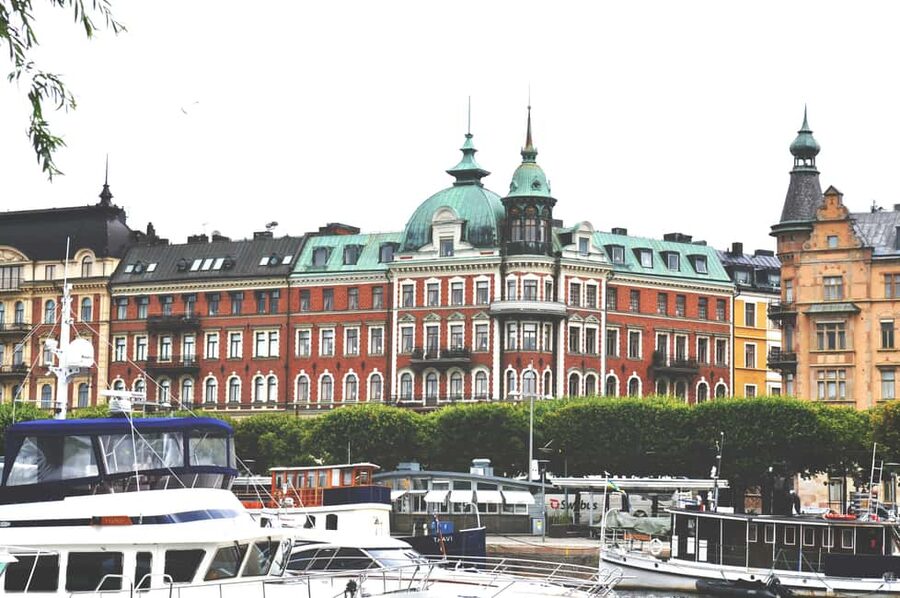
Your first major area is Blasieholmen, a district tied to understated influence. The tour frames it as a place where power sits behind an elegant public face, and that theme is what makes the walking section click.
This is where you get architecture with a purpose. You are guided past settings associated with four of Sweden’s exclusive gentlemen’s clubs, still in use for their members. The guide connects the buildings to the people who shaped politics and business, especially the kind of influence that happens away from press conferences and city squares.
What I like about this approach for your trip is that it trains your eye. Instead of just noticing “pretty mansions,” you start asking different questions:
- Why is this entrance so formal?
- What kind of privacy does this layout encourage?
- How does the street presence communicate status?
If you enjoy stories that explain how decisions can stay “off the record,” you will probably feel like this tour gives you a key to Stockholm’s social map.
Possible reality check: this is not a museum stop where you go in and out of rooms. You are mostly walking and observing exterior spaces and nearby meeting points. That works well if you like street-level interpretation.
Tändstickspalatset: Swedish Match, ambition, and modern design you can see
From Blasieholmen you move toward Tändstickspalatset, introduced on this tour as once the headquarters of the Swedish Match empire. The emphasis here is not just corporate trivia. You learn how the building became a symbol of industrial ambition and modern design, and you get to view it up close enough to notice how architecture signals confidence.
The tour also brings in a useful comparative angle, linking the building’s style and significance to broader European capital trends. That helps you read Stockholm as part of a larger design conversation, not an island that developed in isolation.
For me, this is one of the most “practical knowledge” sections of the route. When you understand what a building was built to represent, you can spot meaning in details you might otherwise ignore. Even if you are not an architecture person, the storytelling makes the surfaces feel less abstract.
Kungsträdgården, King’s Garden, and the Karl XII statue controversy
Then you reach Kungsträdgården, described as Stockholm’s King’s Garden. This stop is one of the tour’s best examples of how a public park can carry political weight and historical controversy.
You learn how the park has reflected changes in Sweden’s identity over centuries. The tour connects it to palaces that once stood here, and how those structures were later consumed by fire. You also hear about controversies surrounding the statue of King Karl XII. That combination of physical history and public debate is exactly what makes city-center landmarks feel alive.
Here is how this helps your trip: once you know that a place is disputed or transformed, you start noticing why people argue about it. You also understand why the city keeps revisiting certain symbols, especially ones tied to national power.
One more point that matters in winter: parks can feel open and windy. This is why the pacing matters on this tour. You should dress for cold exposure, and you will appreciate the planned warmth later.
A few more Stockholm outings lined up together
- Stockholm: ABBA The Museum Entrance Ticket
★ 4.7 · 11,280 reviews - Stockholm: Skansen Open-Air Museum Admission Ticket
★ 4.5 · 3,427 reviews - Stockholm: Hop-On Hop-Off Bus or Boat Option
★ 4.0 · 3,260 reviews - Stockholm: Archipelago Boat Tour
★ 4.4 · 3,110 reviews
Discreet clubs and meeting houses: stories of intrigue in plain sight
Between the bigger anchor points, the tour includes more discreet stops tied to meeting places and social structures. The guide’s theme stays consistent: politics, loyalty, and intrigue that played out through institutions rather than public stages.
This part of the walk is where the storytelling really becomes “research-based.” You are not only hearing legends. You are getting framing about how central Stockholm operated like a network, where people were linked through clubs, chambers, and formal meeting spaces.
If you like history that explains motives, this is likely to be the part you remember most. It also pairs well with the architecture sections. You are seeing the kind of settings where certain types of conversations make sense.
One consideration: if you came for big panorama views and lots of time at famous waterfront viewpoints, you might want to add extra time elsewhere in Stockholm. This tour is built for context, not for long sightseeing breaks.
Skeppsholmen and the naval thread that ties the city together
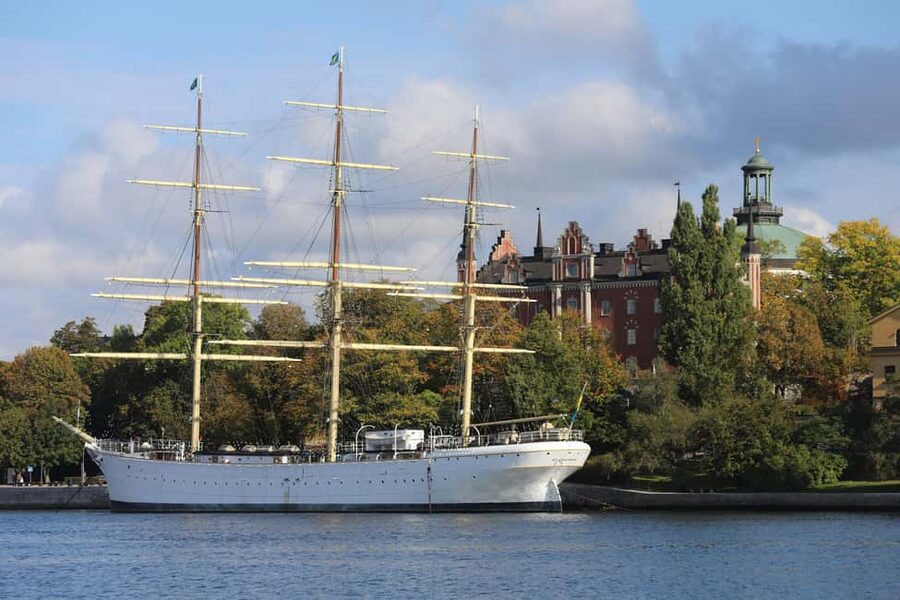
The route also includes Skeppsholmen, and it is presented as part of Stockholm’s broader naval heritage and history. You do not get a long history lecture here. Instead, the stop supports what the tour has been building: Stockholm’s rise and role has ties to ships, maritime strategy, and the way the city organized power.
This is a strong match for the tour’s overall focus on Swedish naval history and architecture. You see how the city’s identity includes more than royal buildings and government squares. It includes the maritime side that helped shape how Sweden developed.
Even in winter, Skeppsholmen tends to feel atmospheric, and it acts like a bridge between the city-center institutional areas and the broader sense of Stockholm as a water-connected capital.
National Museum fika stop: warm up at the end without losing the plot
The tour ends at the National Museum, Stockholm, with scenic views along the way. The idea is simple and useful: after a cold walk, you get a warm break and time to regroup.
About the fika: the tour data says food and drinks are not included, but the experience is described as welcoming you to end with a traditional Swedish fika at the National Museum café. In other words, plan to order what you want there. Reviews also mention that the guide ended with fika together, which makes it feel less like a hard stop and more like a friendly wrap-up.
This ending is smart for your schedule. You do not have to rush to find a café on your own in the cold. You also get a final moment to ask questions while you warm up. If your guide, like Giancarlo, keeps answering questions with patience, this is where that energy pays off.
Price and timing: does $31 feel like good value?
At $31 per person for roughly 75 minutes, you are paying for three things: a guide, a curated route through specific city areas, and the small-group format.
The value lands well if you like guided interpretation. You are not just walking to famous viewpoints. You are receiving explanations tied to:
- Swedish power structures and influence
- building history like Tändstickspalatset
- contested public symbols in Kungsträdgården
- naval context through the route
The small group matters here. With max 6 participants, you avoid the feeling of being anonymous. And that makes a short tour feel longer in a good way, because you can steer questions toward what you care about most.
Timing note: the tour lists 60 to 75 minutes. One review mentioned a session running 90 minutes, so if you ask a lot of questions, it is not crazy to expect a bit of extra time.
Who this tour fits best, and who should skip it
This is best for you if you:
- Prefer central neighborhoods over an all-day old town rush
- Enjoy architecture with context and stories that explain motive
- Want a short, guided winter experience with time for questions
- Like a guide who can talk about politics, institutions, and how cities evolve
You might want to skip it or pair it with something else if you:
- Want a highly physical sightseeing day with lots of long photo stops
- Need frequent indoor access, because the core experience is a walking tour
- Have mobility needs that make uneven surfaces hard
Also, the tour is not suitable for wheelchair users and not for people over 95 years, based on the activity rules.
A quick sanity checklist before you go
This is a winter city walk, so you should plan like it matters:
- Wear warm clothing and warm shoes
- Expect windy spots, especially around outdoor areas
- Bring patience for short distances that still feel cold when standing to look at details
A small but helpful detail from the meeting instructions: the guide will be in black with jeans and a black umbrella, which makes it easier to find the right person quickly at Västra Trädgårdsgatan 2A.
Should you book the Kungsträdgården Norrmalm guided tour?
I think it is a smart booking if you want more than the usual Stockholm highlights. The blend of Blasieholmen power stories, architecture tied to Swedish industry and institutions, and a calm ending at the National Museum fika gives you value in a tight time window.
Book it if you enjoy asking questions and want a tour that feels personal, not crowded. The max 6 size is the main reason. Book it if you care about how Stockholm works behind the scenes, not only how it looks from a bridge.
If you are mainly chasing big sights with lots of time for wandering on your own, you might treat this as a “context layer” and add standalone sightseeing before or after.
Either way, do it for one reason: this route turns the center of Stockholm into a readable story, and it does it in winter without wasting your time.
FAQ
Where does the tour start?
You meet outside S:t Jacobs kyrka, at Västra Trädgårdsgatan 2A.
How long is the Stockholm City Center Kungsträdgården Norrmalm guided tour?
The duration is listed as 75 minutes, with the tour typically running between 60 and 75 minutes.
What is the group size?
It is a small group limited to a maximum of 6 participants.
What language is the tour in?
The live tour guide speaks English.
Is food or drinks included?
Food and drinks are not included, but the tour ends at the National Museum with a fika stop where you can warm up and order something.
What should I wear or bring for the winter walk?
Wear warm clothing and warm shoes. The walking route can be windy and may include uneven surfaces.
Is the tour wheelchair accessible?
No. The tour is not suitable for wheelchair users, and it is also not suitable for people over 95 years old.
Just listed in Stockholm
- Stockholm: Old Town by Locals + Exclusive Souvenir Poster★ 5.0 · 4 reviews
- 3 Hours Guided Shopping Tour in Stockholm Thrifting Stores★ 5.0 · 4 reviews
- Icebathing and Sauna in Stockholm nature★ 5.0 · 4 reviews
- Central Stockholm: A Self-Guided Audio Tour in the Modern City★ 5.0 · 4 reviews
- World War II Stockholm Old Town Walking Tour and Army Museum★ 4.6 · 4 reviews
- Stockholm Jogging Tour★ 3.9 · 6 reviews
- Wolf and Wildlife Tracking in Sweden★ 5.0 · 9 reviews
- Stockholm: Hike, Forest Lunch, and Cold-Water Floating★ 4.9 · 8 reviews
City Tours, compared.
City Archipelago Sightseeing Cruise with Guide
Read our review →
Guided City Sightseeing Open Electric Boat Tour
Read our review →

Browse the lists this tour appears in