
Reviewed · WALKING TOURS
The Story of Stockholm and Sweden in Three Chapters, a Small Group Walking Tour
Stockholm can feel like a postcard of pretty streets and waterfronts. This tour makes it more useful by turning the city into a three-chapter history story you can walk through step by step. I like that admission is included along the way, so you skip the usual ticket-line friction, and I like the small group size capped at 10, which keeps the pace friendly and questions easy.
One thing to consider: this is still a walking tour. You’ll be outside a lot, standing for explanations at statues and landmarks, and you’ll need a moderate fitness level to keep up comfortably, especially in colder or rainy weather.
Key things I’d watch for before you go
- A three-chapter way to connect the dots from early settlements to modern Sweden
- Admission included, so you don’t lose time hunting tickets
- Spotify and IKEA connections through the story of Swedish entrepreneurs
- Max 10 people, for a calmer, more conversational walk
- A location-smart ending near the Royal Palace for the changing of the guards
- Mobile ticket in English, with confirmation at booking
Entering a Stockholm story you can walk through in 2 hours
This is one of those tours that respects your time. It’s about 2 hours and paced like a “history tour you can actually finish,” not a marathon where you forget half the details by stop three.
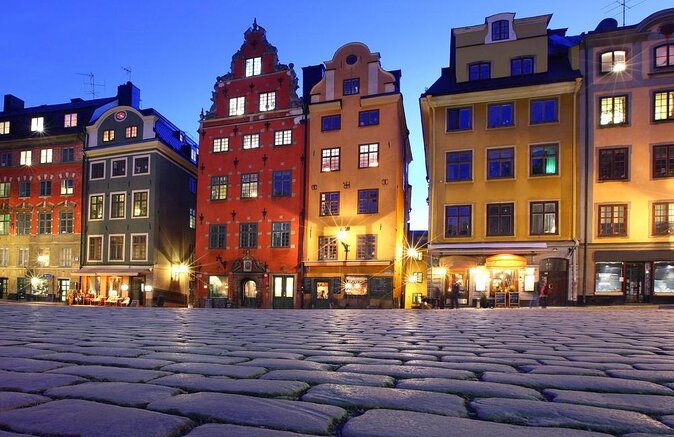
The format helps. Instead of random dates, you get a story arc in chapters. You start with the deep background of land and settlements, then move through founders and state-building, and finish with modern Sweden, inventions, and the Nobel world. It’s a neat trick because you start recognizing why places in Gamla Stan look the way they do, and why certain names keep showing up.
And because the group is limited to 10 travelers, you get more than a lecture voice talking at you. It feels more like a guided walk where you can ask a quick question and keep moving.
More Walking Tours in Stockholm
- Stockholm: Ghost Walk and Historical Tour
★ 4.7 · 2,685 reviews - Stockholm Gamla Stan: Old Town Walking Tour with Local Guide
★ 4.7 · 1,714 reviews - Walking Tour of Stockholm Old Town
★ 5.0 · 1,175 reviews
Price and logistics: what $61.28 actually covers
The price is $61.28 per person, and the value is in two practical parts.
First, admission is included along the way, which matters in Stockholm because you can waste time if you try to wing every stop. Second, the tour does not try to cram in a giant list of paid attractions. It focuses on interpretation, statues, and key buildings, with ticketed access where it’s needed.
You also get a mobile ticket, and the tour runs in English. It starts at 10:00 am, and confirmation happens at booking, which is exactly what you want on a day when you also have museums, meals, and ferry hops to juggle.
Stop 1: From the Ice Age to Stockholm’s first settlements near Gamla Stan
The tour’s story begins at the Gamla Stan Metro station, inside and underground, in front of the Pressbyrån kiosk. The meeting point listed is Munkbrogatan 8, 111 27 Stockholm, and the tour start is clearly tied to that Gamla Stan area.
Your first landmark is the Riddarholmen historical marker. This is where the guide lays down the big foundation: how Stockholm and Sweden’s early story connects back to the ice age and the first settlements on the islands. If you usually feel lost when you visit Scandinavia’s older sites, this part is designed to fix that quickly.
You’ll also walk around and get to visit open parts of the palace. That’s a smart combination for a short tour: you get context, then you get a physical sense of what later power and culture built on.
Possible downside at this stage: if you’re expecting a lot of sweeping waterfront views immediately, this opener is more about orientation and setting the historical “floor.” It’s important, but it’s not a scenic kickoff.
Stop 2: Riddarholmen Church and the first written mention of Stockholm (1252)
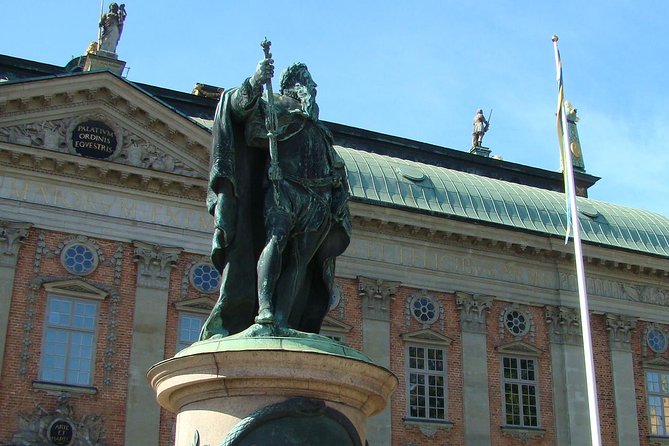
Next you move to Riddarholmen, meeting the story outside Riddarholmen Church. You’ll be pointed toward the presumed founder of Stockholm, Birger Jarl, or a statue that represents him in local memory.
Here’s one of those timeline anchors that makes later chapters click. The year 1252 is when Stockholm was first mentioned in a written text that’s still preserved today. The guide connects that written record to the political momentum of the region, including what Birger Jarl did and why his name matters.
This stop is short, but it’s powerful because it gives you a simple anchor point for your mental map. After this, you start hearing Stockholm’s past as something that already had structure centuries before “tourist Stockholm” ever existed.
Other guided walks in Stockholm:
- Stockholm: Swedish Food Guided Walking Tour
★ 4.5 · 1,167 reviews - The Original Stockholm Ghost Walk and Historical Tour – Gamla Stan
★ 4.5 · 1,165 reviews - Stockholm: Old Town Private Walking Tour
★ 4.7 · 675 reviews - Best of Stockholm Walking Tour-3 Hours, Small Group max 10 people
★ 5.0 · 645 reviews
Stop 3: Riddarhuset, Gustav Vasa, and the switch from Catholic to Lutheran Sweden
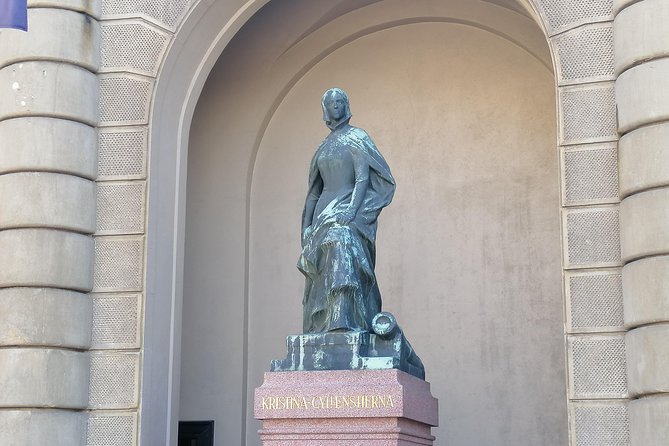
Then you’re at Riddarhuset, the House of Nobility. Outside it, the tour points you to a statue of Gustav Vasa, often described as the father of Sweden.
This is where Chapter Two begins, and the stakes jump. The guide frames Gustav Vasa’s rise around the year 1523, when he marched into Stockholm. The story says Sweden became a sovereign state and was not occupied by foreign powers.
You also hear about the bloodbath of Stockholm, including the scale of noblemen killed, and how that violence helped fuel an uprising against a southern neighbor taking control. Then comes a major cultural shift: Gustav Vasa changed Sweden’s religion from Catholicism to Lutheran Protestantism.
I like this stop because it shows that history here is not just kings making speeches. It’s religion, power, and who controlled the rules of everyday life.
The catch: this chapter is emotionally heavy. If you dislike grim political events, you may want to balance this stop with a slower lunch plan later.
Stop 4: Vasabron and the heirs, warrior kings, and a Baltic Sea that changed shape
From Riddarhuset you cross toward Vasabron. The guide uses the bridge area to talk about heirs and heiresses tied to Gustav Vasa’s line, and then shifts into the “warrior king” era.
A highlight here is Gustav II Adolf, described as one of the greatest warrior kings. The tour notes how, during his time, the Baltic Sea became almost like an inland sea, surrounded by Swedish possessions. That single idea helps you understand why Sweden cared so hard about sea routes and borders, not just land.
This stop is also a good reminder that Sweden’s story is maritime as much as it is royal-palace. If you only think “vikings” and “cold winters,” you’ll leave thinking bigger.
Stop 5: Riksdagshuset and the slow march toward voting rights
Now it’s politics, and it’s specific. You stop outside the Parliament Building, Riksdagshuset.
The tour explains that before the parliament you picture today, there was the Riksdag of the Estates (Ståndsriksdagen). Nobility, clergy, burghers, and peasants met separately before meeting the king in the palace. Until its dissolution in 1866, it was the highest authority in Sweden next to the king.
Then you get the bridge to modern governance. In 1866, a two-chamber parliament was introduced, but without equal voting rights. The tour notes the first elections with general suffrage happened in 1921, after a long political struggle led by liberals and socialists.
This stop is valuable because it gives you the “why” behind Swedish politics being so organized today. It’s not just facts and dates. You get a sense of how power gradually expanded beyond the original estates.
Practical note: you may feel a bit of standing time here, so wear shoes that handle uneven pavement and Stockholm’s cobbles.
Stop 6: Royal Palace viewpoints, Peter the Great, Karl XII, and the eastward point
At the Royal Palace, you head to the north side at a spot called Lejonbacken. This marks Chapter Three, and the vibe shifts from medieval and early modern politics to big European forces colliding with Swedish ambition.
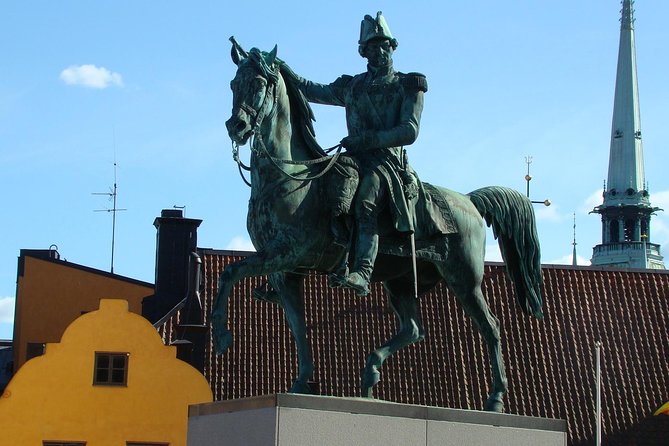
The story includes Peter the Great of Russia, who ended Swedish dreams of being a Northern European power. You also learn about Karl XII, described as the last of the warrior kings, and how the famous statue still points east, where Karl and the Caroleans scored major victories before being defeated in Poltava in 1709.
After that, the tour moves into the age of enlightenment and the arts and sciences. Gustav III appears as an enlightened despot with interest in theater, and the tour credits him with contributions to those fields.
If you’ve ever wondered why Stockholm feels both royal and creative, this stop helps connect it. It’s not just aesthetics. It’s state ambition plus cultural change.
Stop 7: Old Town, Carl XIV Johan, peace, welfare, and inventions that lead to real brands
Now you’re back in the Old Town area, continuing under the statue of Carl XIV Johan, described as the first of the Bernadottes. The guide explains that he was imported to Sweden from France in the early 1800s to help win back what Sweden had lost to the Russians.
But instead of focusing only on military recovery, the tour emphasizes his diplomacy and investment in infrastructure and education. There’s also a milestone in the modern story: in 2014, Sweden celebrated 200 years of peace.
Then the guide connects the dots toward the modern economy. The industrial revolution, natural resources, and Swedish inventions are described as building blocks for the welfare state. And this is where something important for today’s visitors comes in: you hear about how Swedish entrepreneurship shaped what we now associate with modern brands, including connections to Spotify and IKEA.
I like this part because it stops “history sightseeing” from staying trapped in the past. You finish understanding why Swedish innovation became culturally normal, not just technically impressive.
One consideration: this stop is time-heavy in meaning, but shorter in physical content. If you want a long photo break, plan that after the tour since the next stop is the grand ending.
Stop 8: Stortorget, the Nobel Prize Museum, and the changing of the guards timing
The tour ends at Stortorget. The Nobel Prize Museum is located here, and the guide explains that the Swedish Royal Academies designate Nobel winners across science and the arts.
That ending is clever because Stortorget feels like a public square, not a random “guide point.” It gives you a natural last-view moment to soak it in, and you can keep going from there into whichever Nobel-related stop you prefer.
Even better, the tour is timed to end close to the Royal Palace for the changing of the guards. During the summer months, the parade marches or rides with the Music Corps through up to the Outer Courtyard.
Practical tip: if you care about the guard change, arrive a little early or grab a spot that’s not overly crowded. You’ll likely be standing for a short stretch, so dress for it.
Who should book this, and who might prefer something else
This tour is a great fit if you:
- Want big-picture Sweden without getting lost in a pile of dates
- Like your city walks organized by story, not just “here’s a building”
- Appreciate small groups, with 10 travelers max
- Want included access without ticket-line stress
- Enjoy learning how old political shifts connect to today’s Swedish identity, including modern brands like Spotify and IKEA
You might choose a different option if you:
- Hate standing and prefer museum-only visits
- Need a more flexible pace with lots of seating
- Have very limited mobility, since moderate physical fitness is requested
The bottom line: should you book it?
Yes, I’d book it if your goal is to understand Stockholm fast and in a way that sticks. The strongest reasons are practical: included admission, a small group cap, and a story structure that makes the city feel logical instead of random.
It also earns solid praise for being fun and educational, with a strong overall rating of 4.6. One handy sign from the experience is that people love it enough to want more, even if they had to shorten their time.
If you’re spending only a couple days in Stockholm, this is the kind of tour that gives you the mental map for everything else.
FAQ
How long is the walking tour?
It runs for about 2 hours.
What is the group size limit?
The tour is capped at a maximum of 10 travelers.
Is the tour offered in English?
Yes, it is offered in English.
Where does the tour start and end?
It starts at Munkbrogatan 8, 111 27 Stockholm and meets at the Gamla Stan Metro station area in front of the Pressbyrån kiosk. It ends at Stortorget, 111 29 Stockholm.
What time does the tour start?
The start time is 10:00 am.
Is admission included or do I buy tickets separately?
Admission is included along the way, and the tour notes admission ticket free for the stops.
Do I need any special ticket format?
You’ll receive a mobile ticket.
What fitness level do I need?
The tour notes a moderate physical fitness level is recommended.
What is the cancellation policy?
You can cancel for a full refund up to 24 hours before the experience’s start time. If you cancel less than 24 hours before, you will not receive a refund.
How can I tell if this is a good match for me?
It’s a good match if you want a guided walk that connects Swedish history across multiple eras and you’re comfortable standing for short periods at outdoor landmarks.
Just listed in Stockholm
- Stockholm: Old Town by Locals + Exclusive Souvenir Poster★ 5.0 · 4 reviews
- 3 Hours Guided Shopping Tour in Stockholm Thrifting Stores★ 5.0 · 4 reviews
- Icebathing and Sauna in Stockholm nature★ 5.0 · 4 reviews
- Central Stockholm: A Self-Guided Audio Tour in the Modern City★ 5.0 · 4 reviews
- World War II Stockholm Old Town Walking Tour and Army Museum★ 4.6 · 4 reviews
- Stockholm Jogging Tour★ 3.9 · 6 reviews
- Wolf and Wildlife Tracking in Sweden★ 5.0 · 9 reviews
- Stockholm: Hike, Forest Lunch, and Cold-Water Floating★ 4.9 · 8 reviews
Walking Tours, compared.
Stockholm Gamla Stan: Old Town Walking Tour with Local Guide
Read our review →

The Original Stockholm Ghost Walk and Historical Tour – Gamla Stan
Read our review →
Best of Stockholm Walking Tour-3 Hours, Small Group max 10 people
Read our review →
Browse the lists this tour appears in