Reviewed · STOCKHOLM TOURS
4-Day Small-Group Intermediate Survival Course in Södermanland
This kind of course is interesting because it teaches you what to do when nature stops being a postcard and starts being a problem. Over four days in the Swedish wilderness, you practice real basics fast, with an instructor who focuses on usable technique, not vague theory.
I especially like the balance of hands-on survival skills and outdoor confidence you build through repeated practice. And I like that you also learn how to read the landscape, not just how to make a fire. One thing to consider is that it can be physically and mentally tough, since you’re living the lessons in the field, not watching them from a warm classroom.
Key takeaways before you go
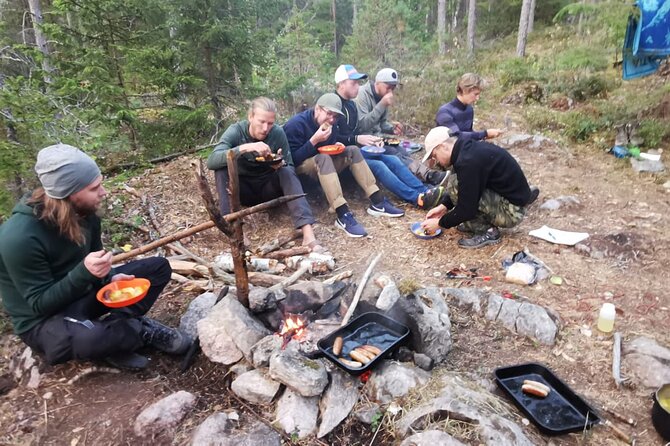
- Small-group format with 3 to 5 participants depending on season, up to 8 maximum, so you get real attention.
- Whole-course in the wilderness, so skills like fire, shelter, water, and food are taught by doing.
- Plants with practical safety focus, including edible, toxic, and medicinal categories.
- Navigation and orienteering so you can get your bearings and avoid wandering in circles.
- Wildlife tracking plus fishing and trapping, taught with an emphasis on risk and common sense.
- Group survival and leadership, because survival is rarely a solo sport.
Why this Södermanland survival course feels practical, not theatrical
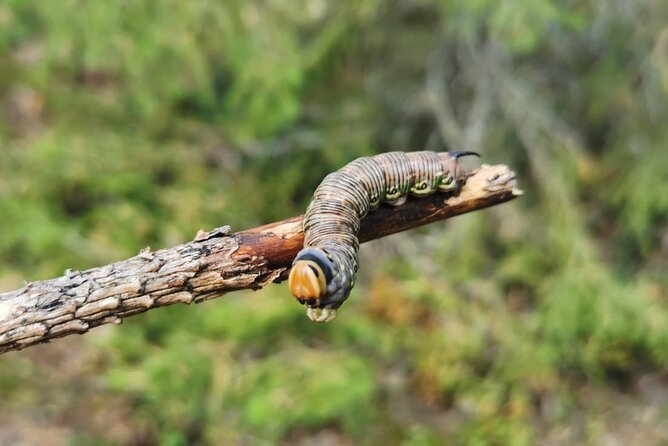
A good survival course does two things: it makes you calmer under pressure, and it gives you repeatable steps. This one is built around that idea. Situations requiring survival training can happen without warning, so the whole course pushes you to react quickly and methodically.
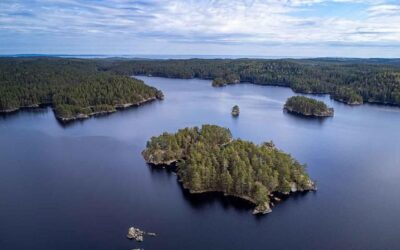
The setting matters too. You start from Stockholm, but the learning happens in the wild landscape of Southern Sweden, where weather, terrain, and daylight really affect your decisions. You’re not just learning skills, you’re learning how to apply them when conditions change.
The instruction also feels grounded. In the course, you’ll work on core topics like fire building, shelter building, water collection, foraging, and orientation. That’s not “cool camp tricks.” That’s the stuff that turns fear into a plan.
A few more Stockholm outings lined up together
- Stockholm: ABBA The Museum Entrance Ticket
★ 4.7 · 11,280 reviews - Stockholm: City Archipelago Sightseeing Cruise with Guide
★ 4.3 · 10,798 reviews - Stockholm: Skansen Open-Air Museum Admission Ticket
★ 4.5 · 3,427 reviews
Price and what you really get for around $1,011
At $1,011.22 per person for a 4-day intermediate course, the price is not low. But it’s also not just paying for a guide to talk at you. Your cost covers meals, transportation, and the equipment you need to do the work.
Here’s what’s included:
- Breakfast, lunch, dinner (so you’re not spending your time figuring out food)
- Private transportation
- All needed gear
- A mobile ticket
- Course offered in English
- Maximum group size up to 8 travelers
What’s not included:
- Travel insurance
- Alcoholic beverages
- Camping gear for SEK 1,000 per person
- Backpack rental for SEK 200 per person
That last part matters for your budgeting. Even though the course says “all needed gear” is provided, the listing also flags camping gear and backpack rental as additional costs. So if you’re the type who wants to show up with your own setup, you should double-check what you personally need versus what’s supplied.
Bottom line on value: you’re paying for multiple instructors’ real field knowledge plus day after day of structured practice. If you want a survival course mainly for stories or photos, this won’t match. If you want skills you can use under stress, the price becomes easier to justify.
Small groups in the Swedish woods, led by William
This is set up for 3 to 5 participants depending on season, and it can run with a minimum of 3 in the colder months (early October through late April) or a minimum of 5 in the warmer months (early May through late September). In any case, the total group is capped at 8 travelers.
Smaller groups are not just about comfort. They matter because you need feedback while you’re building, tying, testing, and practicing. If you’re making a shelter or starting a fire, you want someone watching your hands, not reading your effort from a distance.
The standout name you’ll hear from participants is William, the instructor with firsthand experience and strong teaching skills. People consistently describe him as well-informed and skilled, with an attitude that feels respectful and encouraging instead of performative. That’s a good sign, because survival teaching has a fine line between confidence and chaos.
Day-to-day flow without the fluff: how the course is organized
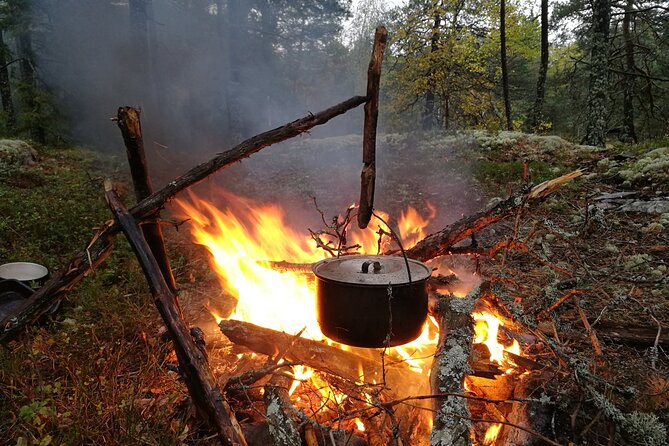
The course runs approximately 4 days, and it’s delivered entirely in the wilderness. Since there’s no “sit and listen all day” structure, your schedule is best understood as moving through skill blocks that all feed one another.
A practical way to expect the rhythm:
- You’ll start by learning how to think in the forest, including orientation and basic planning.
- Then you practice core building tasks like fire and shelter using materials you find around you.
- You move into water and food, including collecting and filtering water-related tasks where relevant, plus a foraging introduction.
- You add movement skills like orienteering and tracking, and also real-world survival tasks like fishing and trapping.
- You end with staying functional as a team, including encampment tricks and survival in group leadership.
The exact order can vary with weather and season, but the curriculum you’ll cover is consistent: fire, shelter, food, water, plants, wildlife tracking and dangers, trapping and fishing, map reading/orientation, and group leadership.
Same city, a different half-day:
- Stockholm: Hop-On Hop-Off Bus or Boat Option
★ 4.0 · 3,260 reviews - Stockholm: Archipelago Boat Tour
★ 4.4 · 3,110 reviews - Stockholm: Paradox Museum Entry Ticket
★ 4.2 · 3,031 reviews - Stockholm: Highlights Boat Tour
★ 4.2 · 2,845 reviews
Fire and shelter: the skills you’ll repeat until they stick
If you take nothing else from this course, take this: fire and shelter are taught as repeatable processes.
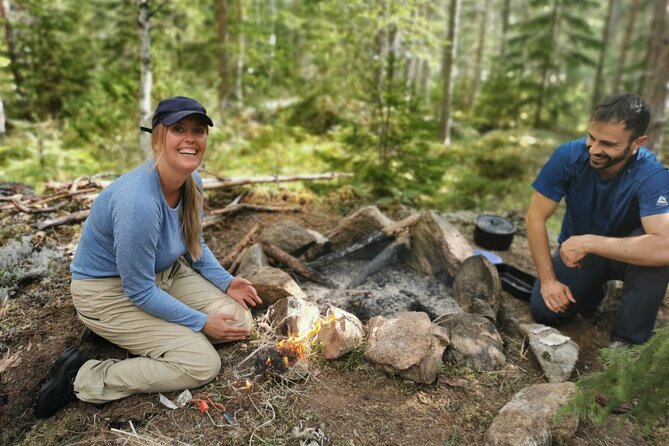
You’ll learn how to build fire, including what materials to use and how to approach ignition using what’s around you. And you’ll learn shelter building based on the realities of staying warm, protected, and functional in the outdoors. Participants talk about building shelters and then having the chance to sleep in the shelter they made, which is a strong indicator the course doesn’t treat shelter-building as a one-off demo.
Why this matters: most people freeze when they can’t solve the basics. If you can construct a workable shelter and produce a sustainable fire, you stop thinking only about panic. You start thinking about timing, safety, and next steps.
Potential drawback: you should expect the shelter and fire sessions to be hands-on and outdoorsy, which means cold, wind, and wet conditions can make things harder. That’s also the point. You don’t want a survival lesson that only works in perfect weather.
Food and water in the field: where to look and what to do
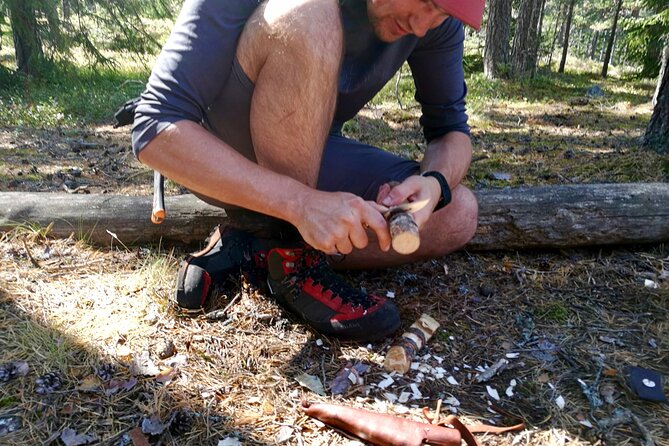
Food and water are where survival training becomes deeply practical. The curriculum explicitly covers water collection and how to think about where to find it. It also covers food, including what to eat and where to find it.
In a course like this, you learn more than “what plants are edible.” You learn decision-making. What’s safe to try? What conditions make something riskier? How do you reduce waste and avoid bad choices?
And since meals are included (breakfast, lunch, dinner), you aren’t going hungry while you’re learning. That’s important for focus. It’s hard to absorb technique when you’re exhausted and cold and distracted by hunger.
Foraging lessons: edible, toxic, and medicinal plants
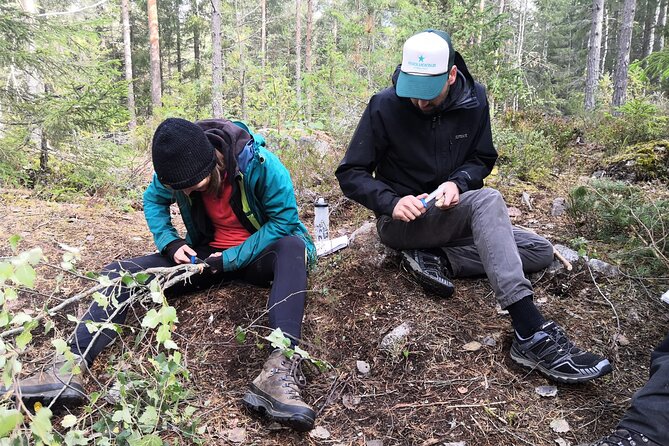
The plants section is one of the most distinctive parts of the course. You’ll get an introduction to edible, toxic, and medicinal plants, which is a big deal in a survival context.
Here’s how to think about it as a student:
- First, learn how to identify plants in a structured way.
- Then learn how to respect toxicity. “Don’t eat everything that looks like food” is not a slogan, it’s a survival principle.
- Finally, you get exposure to medicinal categories, which adds another layer of understanding about plants and human use, even if you’re not trying to replace a medical system.
You should go into this with a serious mindset. Plant identification is not magic and not guesswork. The value of a course like this is that it tries to teach you rules and patterns that reduce risky assumptions.
Wildlife tracking, fishing, and trapping, with safety in mind
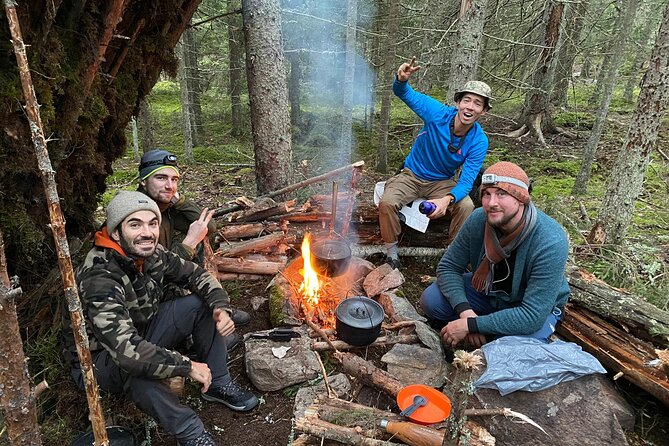
You’ll cover wildlife tracking and understand wildlife dangers, plus skills like fishing and trapping.
This is one of those areas where the instructor’s real experience matters. Tracking isn’t just spotting footprints and moving on. It’s about reading signs correctly and recognizing what those signs imply about danger, behavior, and your next move.
For fishing and trapping, the course keeps it practical. You’re learning methods that relate directly to finding food with limited resources. The best courses also help you avoid unnecessary risk, like spending too long in one place or using techniques that could backfire.
A consideration before you sign up: if you feel strongly uncomfortable around traps or animals, make sure you’re aligned with this part of the curriculum. The intent is survival skills, so the training focuses on realism.
Orienteering and map reading when the forest rearranges itself
Navigation is included in the course through orientation and map reading plus wilderness practice like orienteering. In the real world, forests don’t stay still. Visibility changes. Trails vanish. Landmarks disappear.
So the goal here is not to make you a professional cartographer. The goal is to help you get your bearings fast and respond when you’re uncertain. That means learning how to move with purpose, check direction, and use the land rather than just follow instinct.
The “intermediate” level fits people who already have some basic outdoor comfort, or who are ready to learn it quickly and stay coachable. If you’ve never used a map before, you might still manage, but your learning curve will be steeper.
Encampment tricks and group survival leadership
Survival rarely ends when you build one shelter. You still have to live in a temporary setup, manage small tasks, and prevent small problems from turning into big ones.
That’s where the course includes encampment tricks, plus survival in group with an emphasis on leadership. Expect teamwork dynamics: taking roles, communicating clearly, and supporting each other when fatigue sets in.
Why I like this part: most “survival videos” show a hero. Real survival is a team effort. You might need someone to take navigation responsibility, someone to check the safety of camp setup, and someone to keep the group calm. Leadership here is not about being the loudest person. It’s about being the most reliable one.
And since the group stays small, you get a chance to participate instead of being dragged along.
What it’s like to be out there: fitness, comfort, and mindset
The course can be challenging. People describe it as hard work, tough at times both physically and mentally, and definitely out of the comfort zone.
So I’d plan like this:
- You’ll spend long stretches outside.
- You’ll do repetitive practical work with real effort.
- You’ll feel the mental load of staying focused on safety and decisions.
On the positive side, participants highlight that instruction is supportive and that you learn by doing, not by guessing. If you prefer step-by-step guidance and want your skills tested in real conditions, you’re in the right place.
Logistics that matter: where you start and how long it lasts
You meet at True Nature Sweden AB, Tideliusgatan 62, 118 69 Stockholm, Sweden. Start time is 9:00 am. The course ends back at the same meeting point.
The total duration is about 4 days, and you’re given all needed gear. Confirmation happens within 48 hours of booking, depending on availability.
Also note the course is offered in English, so you should feel comfortable participating even if your Swedish is limited.
Who this intermediate survival course suits best
This course is a strong match if you:
- Want real wilderness skills like fire, shelter, water, and foraging fundamentals.
- Enjoy structured coaching and repetitive practice, not just “learning about survival.”
- Are comfortable being physically active outdoors for days.
- Want to learn navigation and group decision-making, not only individual survival tricks.
- Like the idea of learning from William and absorbing his hands-on approach.
It might be less ideal if:
- You’re seeking a gentle nature walk.
- You’re very sensitive to cold and wet conditions.
- You’re not interested in fishing, trapping, or wildlife safety topics.
Should you book it?
If you want a survival course for novelty, skip it. If you want skills that help you think clearly when conditions change, book it.
Here’s the decision shortcut I’d use:
- Choose it if your goal is practical competence and confidence through repetition.
- Pass or choose another option if you want comfort-first outdoor time or you’re not ready for physical and mental effort.
Given the included meals, private transportation, small-group size, and full wilderness instruction, this course is good value for the kind of training it delivers. It’s not a shortcut to being “prepared for anything,” but it can absolutely make you more capable for real life, even after you leave the forest.
FAQ
What language is the survival course offered in?
The course is offered in English.
How many people are in the group?
The group size is 3 to 5 participants depending on season, and the course has a maximum of 8 travelers.
Where do we meet, and what time does the course start?
You meet at True Nature Sweden AB, Tideliusgatan 62, 118 69 Stockholm, Sweden, starting at 9:00 am. It ends back at the same meeting point.
What’s included in the price?
Included are breakfast, lunch, and dinner, private transportation, and all needed gear. You also receive a mobile ticket.
Are meals and drinks included?
Meals are included: breakfast, lunch, and dinner. Alcoholic beverages are not included.
Do I need camping gear or a backpack?
Camping gear SEK 1,000 per person is not included, and backpack rental SEK 200 per person is also not included. The course does provide what it lists as needed gear, but these items are shown as additional.
How do confirmations work after booking?
You’ll receive confirmation within 48 hours of booking, subject to availability.
What if the minimum number of participants is not met, or if I need to cancel?
The activity requires a minimum number of travelers: 3 participants early October to late April, and 5 participants early May to late September. If it’s canceled due to not meeting the minimum, you’ll be offered a different date or a full refund. You can cancel for a full refund up to 24 hours before the start time.
Just listed in Stockholm
- Stockholm: Old Town by Locals + Exclusive Souvenir Poster★ 5.0 · 4 reviews
- 3 Hours Guided Shopping Tour in Stockholm Thrifting Stores★ 5.0 · 4 reviews
- Icebathing and Sauna in Stockholm nature★ 5.0 · 4 reviews
- Central Stockholm: A Self-Guided Audio Tour in the Modern City★ 5.0 · 4 reviews
- World War II Stockholm Old Town Walking Tour and Army Museum★ 4.6 · 4 reviews
- Stockholm Jogging Tour★ 3.9 · 6 reviews
- Wolf and Wildlife Tracking in Sweden★ 5.0 · 9 reviews
- Stockholm: Hike, Forest Lunch, and Cold-Water Floating★ 4.9 · 8 reviews
Stockholm Tours, compared.


City Archipelago Sightseeing Cruise with Guide
Read our review →