
Reviewed · MUSEUMS
Stockholm: Paradox Museum Entry Ticket
This is interesting because you do not just watch illusions, you handle them. The whole Paradox Museum experience is built like a mind-game walk-through, where your eyes and even your sense of touch get fooled. I love the 70-plus interactive exhibits, and I love the marked photo points that help you get the shots without guessing. One consideration: it is a one-way flow and a timed slot, so if it is crowded, you may feel a bit rushed at the photo moments.
I also like that the museum makes the learning part feel practical. You follow signs, you scan QR codes for extra info, and staff can explain what is happening. People even name staff like Izzy and Georgina as especially helpful when it comes to making photos work.
The payoff is a museum that feels fun for kids and still satisfying for adults, but it is not the best pick if you want a slow, quiet, sit-down type of museum visit.
Key things to know before you go
- One-way flow maze with clear signs, so you keep moving through exhibits
- 70-plus hands-on paradox exhibits built around visual and tactile tricks
- Photo points with the best angles, plus staff help for group shots
- A timed 80-minute slot, so pacing matters when it gets busy
- Zero Gravity costs extra (not included in the base ticket)
- Paradox Boutique sells games and gadgets to bring the concepts home
Paradox Museum Stockholm, right by Hötorget
Paradox Museum Stockholm is set up for a very specific kind of day: you want something hands-on, a little weird, and easy to fit into your downtown plans. The museum is on Sergelgatan 20, right by Hötorget subway station, with street-level entry. That matters in Stockholm, because when the weather turns, you can still get your fun fix without long detours.
For many people, the location also makes timing simpler. You can slot this into an afternoon around central sights or after a meal without feeling like you spent half your day commuting. And since the visit is designed as a smooth walk-through, you are not hunting for “the next thing,” you are following the flow.
The museum is wheelchair accessible, so you should not need to plan around steps or long detours. And it is family-friendly in a very real way, not just in marketing language.
Other museum days in Stockholm:
- Stockholm: ABBA The Museum Entrance Ticket
★ 4.7 · 11,280 reviews - Stockholm: Skansen Open-Air Museum Admission Ticket
★ 4.5 · 3,427 reviews - Stockholm Pass: Save up to 50% – Includes Vasa Museum Ticket
★ 4.1 · 2,392 reviews
How the one-way flow changes the whole experience
This museum works like a path, not like a choose-your-own-adventure museum. You follow the signs through exhibits in a one-way route. That is good news if you get impatient with complicated museums, or if you are traveling with kids who need momentum.
The trade-off is that you cannot hop back to earlier rooms for one more try. If you want to repeat a photo trick or linger for a second round at your favorites, you need to do that as you reach them, not later.
It is also a timed activity, so you should arrive on time for your slot. If you show up late, you may lose time inside because the experience is built to run in sequence. Reviews also hint that crowding can change how relaxed you feel, especially around the most popular photo spots.
My practical take: treat it like an 80-minute “hands-on photo mission.” Go in with a mindset of play first, then slow down when you find your top 2 or 3 exhibits.
The 70-plus exhibits: optical tricks, tactile moments, and lots of mirrors
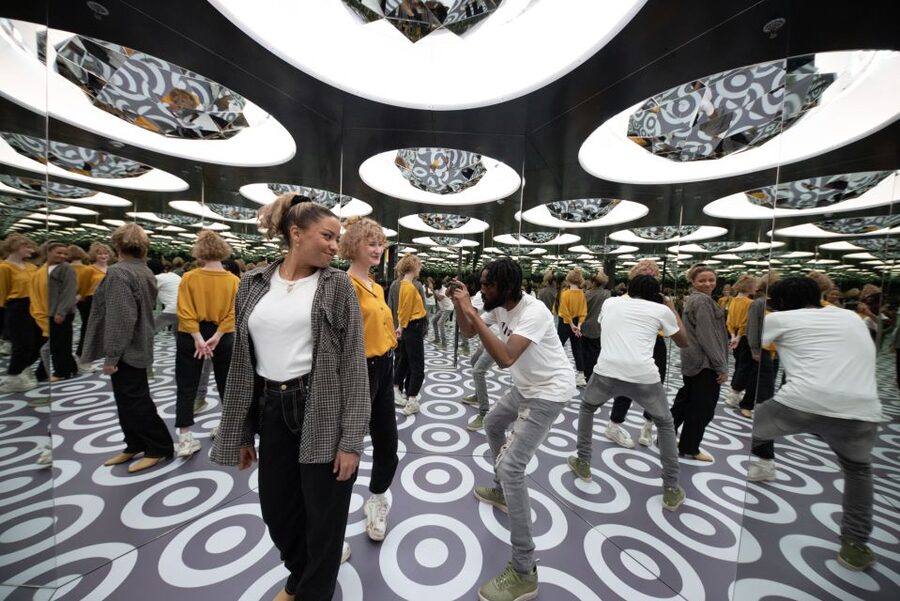
The core promise here is that your brain and senses can be tricked. Expect a lot of experiences that rely on light, scale, perspective, and mirror-based illusions, plus some exhibits that ask you to interact more physically than you might in a normal museum.
Many people love that you get lots of variety without needing advanced knowledge. You do not need a science degree to enjoy the show. The exhibit descriptions tell you what to do and what is going on, so you are not left guessing.
A common theme is that some effects work best when you can line up with others. Several reviews point out that a few exhibits may require two or three people to get the full payoff, especially for photos where multiple positions matter. If you are traveling solo, you can still enjoy plenty, but you might find certain moments easier with a group. On the plus side, staff may set up a phone camera stand and help you stage shots, which is a huge relief for solo travelers.
Also, some visitors feel the experience is more about visual surprises than about other sensory topics like sound. If that is your personal museum interest, keep your expectations focused on the visual and touch-based paradoxes you are walking into.
Starting strong: the rotating cylinder and the first wow factor
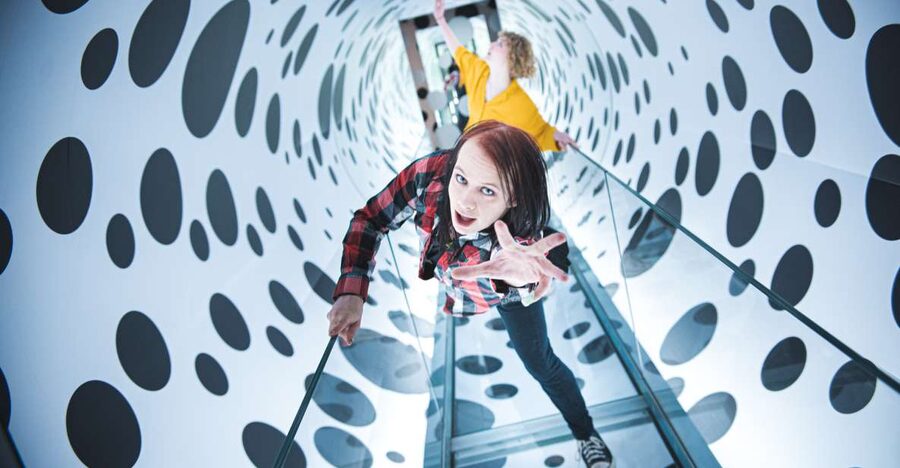
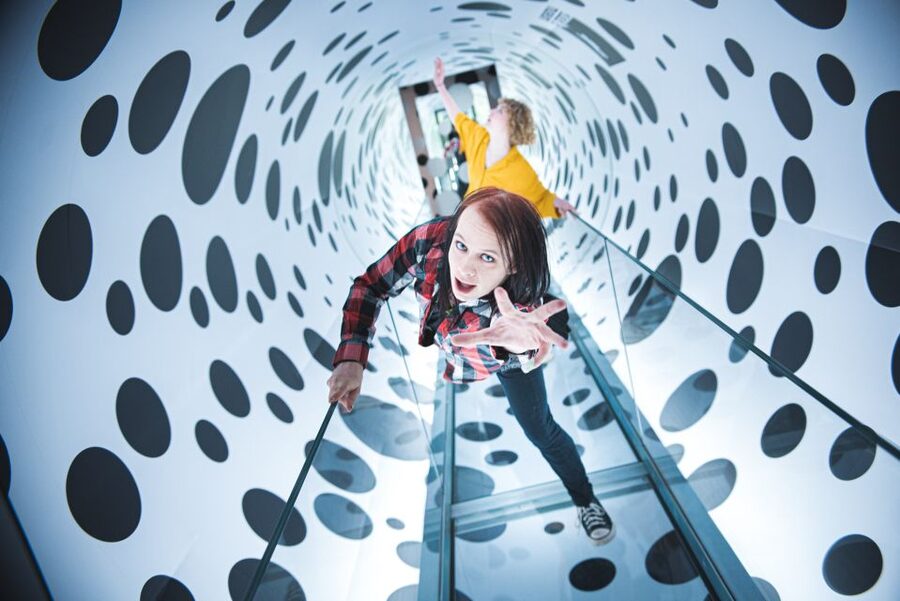
Most people talk about the beginning as a highlight. Early on, you will hit a rotating cylinder experience that sets the tone. It is the kind of exhibit that makes you immediately understand the museum style: step in, watch what happens, then try to “beat” the illusion with your own movement.
This matters because it warms up your brain. Once you get the hang of how the museum wants you to act, the later rooms feel less confusing and more playful. You stop trying to prove the illusion wrong, and you start exploring how your perception is being guided.
From there, the route keeps you moving with clear direction, so you do not have to stop and study signage for long. You just follow the signs and let the exhibit order do the work.
A few more Stockholm outings lined up together
- Stockholm: City Archipelago Sightseeing Cruise with Guide
★ 4.3 · 10,798 reviews - Stockholm: Hop-On Hop-Off Bus or Boat Option
★ 4.0 · 3,260 reviews - Stockholm: Archipelago Boat Tour
★ 4.4 · 3,110 reviews - Stockholm: Highlights Boat Tour
★ 4.2 · 2,845 reviews
The scale games: tall vs small rooms and getting your perspective right
One of the most frequently praised highlights is the tall vs small room concept. These rooms are all about tricking your sense of size and distance, using perspective and staging. If you have ever felt like a photo made you look taller or shorter than you expected, this kind of room is built for that same psychological effect, but on full display.
This is where your camera habits matter. If you try to photograph from random angles, you might miss the moment where the illusion looks strongest. The museum helps by placing marked photo points so you know where to stand.
Practical tip: when you reach these rooms, give yourself one minute to find the photo mark first. Then shoot one quick photo, then adjust. In a crowded slot, that order helps you avoid wasting time redoing the best shot.
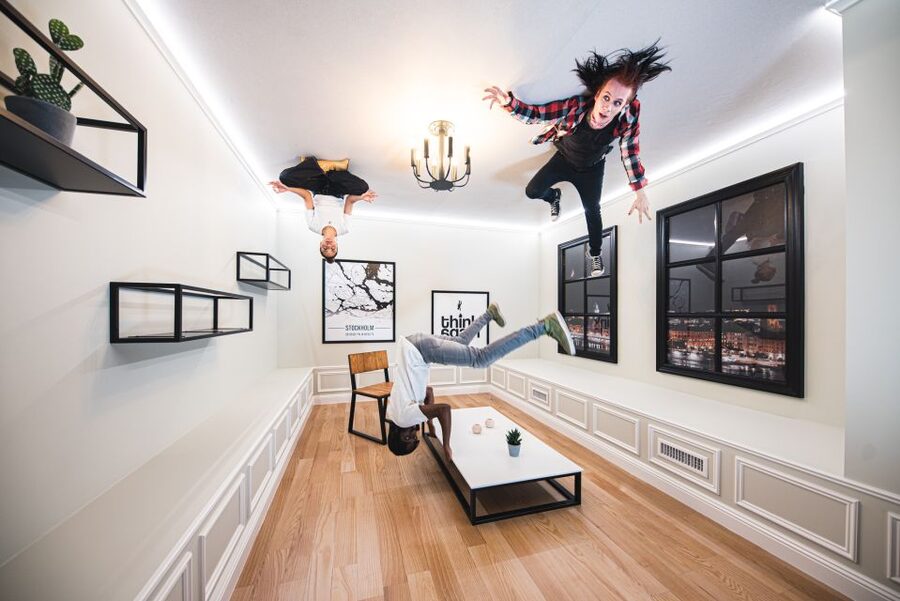
Going upside down: the upside-down room moment

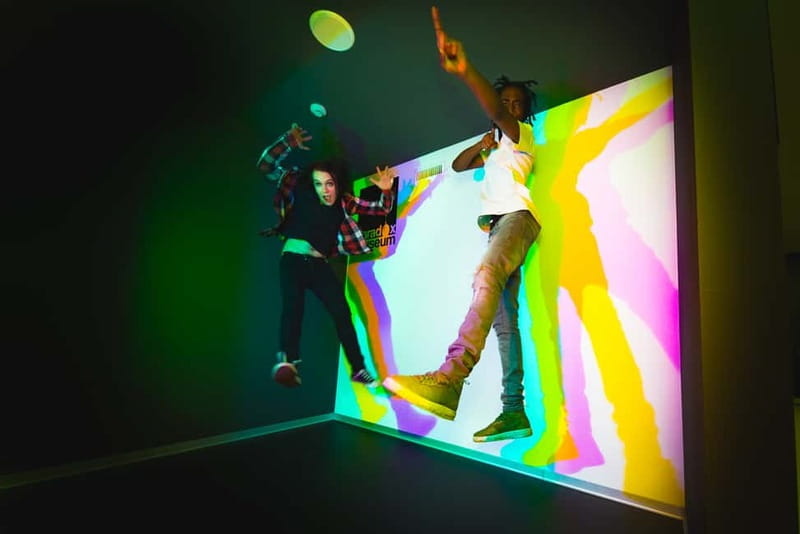
The upside-down room is another standout. It is fun in a way that feels instantly understandable, even before you read instructions. You can treat it like a pose-and-play stop, but there is still a reason it works. Your brain expects gravity cues, then you get a staged environment that reassigns what your body thinks should be happening.
It is one of those exhibits that many families and couples pick as their main “memory photo” stop. People also note that when it is busy, getting the right staging positions can be a little competitive, because multiple people want the same angles.
If the room is crowded, take a short breather nearby, then try again in a different gap. Staff support can help with photo timing, but you still want to play fair and be patient with others.
QR codes, exhibit directions, and why the staff can make or break it
What makes this museum work well is that it does not leave you alone in the dark. You will see exhibit descriptions explaining what to do and what is going on. You can also scan QR codes to learn more, which is a nice feature if you like a quick explanation without turning the visit into a lecture.
Then there is the human help. Multiple reviews call out friendly, supportive staff and say they assist with photos. People name staff members like Izzy and Georgina, and the consistent idea is clear: the team wants you to leave with good results, not just good intentions.
If you are traveling with kids, this is especially valuable. Kids often want to repeat the moment. Staff help you reposition for photos and keep the experience moving without frustration.
If you are traveling solo, do not assume you will skip the photo-heavy exhibits. One review notes that the museum can set up a camera stand for your phone so you can use a timer. That is one of those small things that makes the visit feel much more equal for solo visitors.
Zero Gravity add-on: what you should know before you budget
Your ticket includes entry to the museum exhibits, but Zero Gravity is an add-on for 20 SEK. That means your $28 price covers the main paradox route, not every extra experience you might see promoted inside.
So should you add Zero Gravity? If you love hands-on, motion-based experiences, it may be worth it to extend the wow factor. If you are working with a tight budget, you can skip it and still get plenty of interactive rooms, including multiple strong photo stops.
My advice is simple: decide based on your travel style. If you hate add-ons at the last minute, plan to stay with the included exhibits only. If you like one or two extra experiences, compare the time you have left in your slot and then add Zero Gravity if it fits.
Timing and crowds: how to get better photos in an 80-minute slot
The visit is designed for about 80 minutes, and that is the planning number you should use. Some reviews suggest it can feel shorter if you move briskly, and that is not a bad thing if you treat it like a fun hour-plus.
The part you can control is pacing. Popular exhibits can create slowdowns, especially around the best photo angles. If you booked a quieter time, you likely get more breathing room to pose, take a second try, and read instructions without shoulder-to-shoulder pressure.
A few reviews mention crowding and note that lighting in some areas could be better. That is not something you can fix, but you can respond. If your photos come out dark or washed, try shifting closer to the marked photo point and adjust your phone exposure rather than giving up.
Also, plan for the one-way design. In a busy slot, you may not want to stop for extended photo sessions in multiple rooms. Pick your top favorites and give them your best effort. Let the rest be fun and fast.
Paradox Boutique: where you bring the fun home
After the exhibits, you end at the Paradox Boutique. This is a good “bookend” because it turns the experience into something you can keep playing with. The shop sells games, clothing items, souvenirs, memorabilia, and gadgets, so you can pick up something small instead of hunting for a novelty gift later.
If you like the museum because it makes you think, games are a logical souvenir. If you mainly came for the photos, clothing and gadgets might be more your style. Either way, it gives your visit a satisfying ending.
If you do not want to spend extra time shopping, you can still do a quick browse, pick one item, and move on. The boutique is optional, but it helps you remember what you saw.
Where this fits in your Stockholm day
Paradox Museum Stockholm is an easy win for a half-day plan because it is centrally located and self-contained. You can pair it with a walk around central neighborhoods or as a break between sightseeing blocks, especially if you want something that works even when you would rather not be outside.
It is also a strong rainy-day option. The museum does not depend on weather, and the “walk through and play” format keeps your time from dragging.
Who I think it suits best:
- Families with kids who like interactive rooms and photos
- Couples who want a playful activity that is not too serious
- Teens who enjoy visual challenges and quick learning moments
- Solo travelers who want a guided route and staff help for photos
Who should think twice:
- If you want a slow, quiet museum with long reading and minimal crowds
- If you dislike timed, one-way experiences
- If you only care about non-visual sciences, since many exhibits focus on sight and mirrors
Is it worth $28? The value math that actually matters
At $28 per person, this is not a freebie, so value depends on what you want from your day. For me, the value equation looks like this:
You pay for an 80-minute, hands-on experience with many exhibits, plus guided directions, photo points, and staff support. That is a lot of activity packed into central Stockholm. And because the experience is built around interaction and photography, it is not just “see it once and leave.”
That said, there are real value concerns. Some people feel it is a bit short, especially if you are expecting a long museum session. Crowds can also reduce perceived value, because you lose time waiting for space to shoot.
My honest take: if you go in ready to play and prioritize photo-heavy rooms, you will feel like you got your money’s worth. If you want a relaxed pace with no pressure, it might feel tight.
Should you book Paradox Museum Stockholm?
Yes, if you want a fun, photo-friendly, family-friendly interactive stop that is easy to reach from central Stockholm. Book it when you can avoid peak crowds, and plan to treat the visit like a moving set of challenges rather than a sit-and-stare museum.
Before you buy, keep two things in mind. First, Zero Gravity is not included, so decide whether you want the add-on. Second, the one-way timed flow means you should pick your favorite exhibits and give them your best effort when you reach them.
If that fits your travel style, this is a smart, high-energy use of an afternoon.
Just listed in Stockholm
- Stockholm: Old Town by Locals + Exclusive Souvenir Poster★ 5.0 · 4 reviews
- 3 Hours Guided Shopping Tour in Stockholm Thrifting Stores★ 5.0 · 4 reviews
- Icebathing and Sauna in Stockholm nature★ 5.0 · 4 reviews
- Central Stockholm: A Self-Guided Audio Tour in the Modern City★ 5.0 · 4 reviews
- World War II Stockholm Old Town Walking Tour and Army Museum★ 4.6 · 4 reviews
- Stockholm Jogging Tour★ 3.9 · 6 reviews
- Wolf and Wildlife Tracking in Sweden★ 5.0 · 9 reviews
- Stockholm: Hike, Forest Lunch, and Cold-Water Floating★ 4.9 · 8 reviews
Museums, compared.



Vasa Museum and Vrak Museum of Wrecks Combo Entry
Read our review →



Skip the Line: Disgusting Food Museum Entrance Ticket
Read our review →Browse the lists this tour appears in