
Reviewed · 2-HOUR EXPERIENCES
Bloody Stockholm 2h – ghosts, horror and Dark Folklore Tour
What makes this experience interesting is the way it mixes grim Stockholm events with Swedish folklore. You walk through Old Town streets where the stories are always tied to a specific doorway, staircase, or square, not just vague “spooky vibes.” I like that the tour treats the supernatural as something practical people tried to manage, and I also like the guide’s tone, which comes off as curious and human, not just scream-and-run.
The main thing to consider is that it is not a typical ghost-hunt with jump scares. The focus is dark storytelling, including executions and death related beliefs, so if you want pure horror thrills, you might find it more like an informative stroll with chilling details than an all-out haunting show.
Key things you’ll notice fast
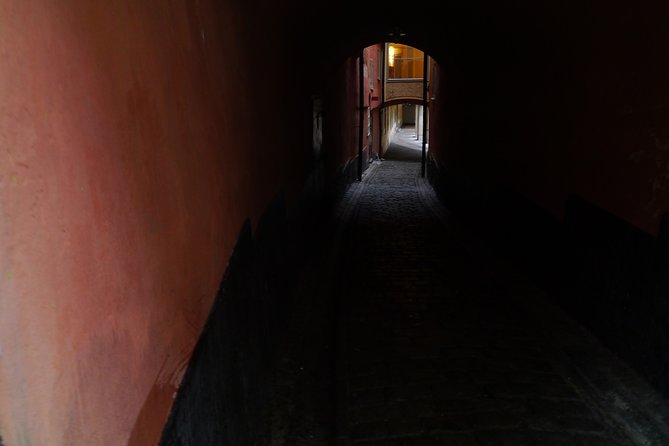
- A folklore tour with street-level details, tied to exact corners in Gamla Stan
- Cursed death beliefs, including blood, body parts, and talisman logic in everyday life
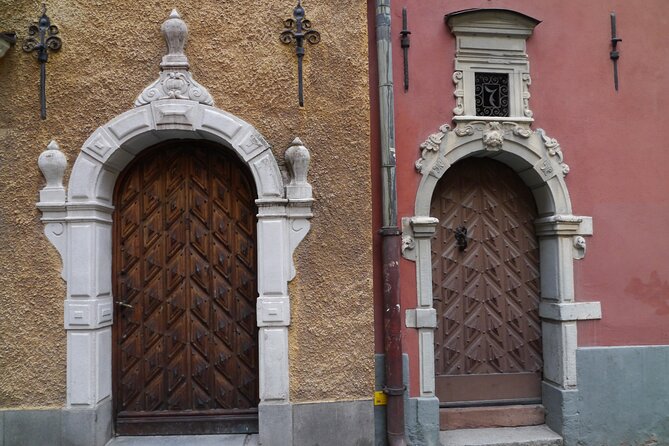
- Door protection and iron wards, explained where you can see the architecture
- Water vaesen stories, with names like Näcken, bäckahästen, Sjörå, and skepps-rå
- Dark forest and the undead child Myrling, plus other creatures linked to nature
- S:t Jacobs Kyrka outside stories, centered on baptism protections and church doors
A dark folklore walk that stays grounded in real places
This tour works because it refuses to float in the abstract. You’re not just hearing about “evil spirits.” You’re hearing about how ordinary people in Sweden imagined danger, and how they tried to protect themselves using symbols, rituals, and even ideas about death itself.
A lot of the enjoyment comes from the balance. You get scary material, but it’s delivered like history you can picture. One of my favorite parts of the experience style is that the guide often has room for questions and a bit of humor, even while talking about executions and curses. The result feels like walking with a clever local storyteller who can keep the mood fun without softening the facts.
That also explains why it can feel more like a dark-history stroll than a classic ghost tour. You may not see anything paranormal. What you do get is a street-by-street sense of what people once believed could harm them, and where they thought the risk lived.
A few more Stockholm outings lined up together
- Stockholm: ABBA The Museum Entrance Ticket
★ 4.7 · 11,280 reviews - Stockholm: City Archipelago Sightseeing Cruise with Guide
★ 4.3 · 10,798 reviews - Stockholm: Skansen Open-Air Museum Admission Ticket
★ 4.5 · 3,427 reviews
Quick logistics: 90 minutes, Old Town walking, and group limits
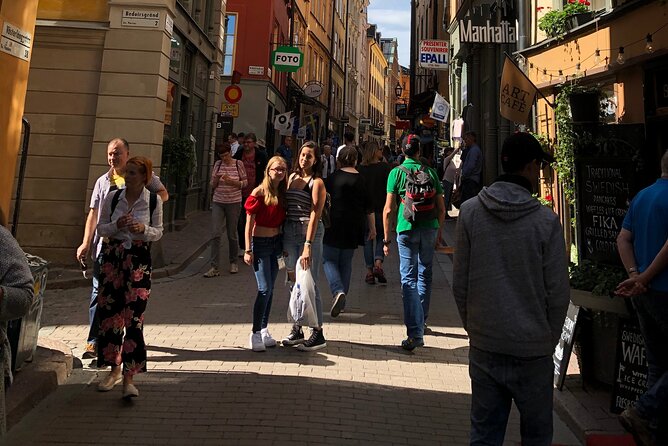
This is a short one, about 1 hour 30 minutes (approx.). It’s scheduled in English and uses a mobile ticket, so you’ll want your phone charged and ready at the start.
The tour max is 30 travelers, which matters because narrow streets can get uncomfortable fast when crowds balloon. With this cap, you have a decent chance of keeping it social and manageable, especially if your group ends up smaller and you can ask more than the usual few questions.
It starts at the Nobel Prize Museum area at Stortorget 2 and ends outside St. Jacob’s Church at Västra Trädgårdsgatan 2A. The ending point is on the north side near Kungsträdgården, and it’s described as about a 10 minute walk back to the start if you want to circle around again.
Since it’s mostly walking through Old Town, dress for weather and cobblestones. One thing I’d plan for: when it’s cold or wet, you’ll appreciate layers and shoes you trust. This kind of tour lives or dies on comfort, because you’re standing still at corners often enough that your feet and hands take the hit.
Stop 1, Stortorget: executions, cursed blood, and magical body parts
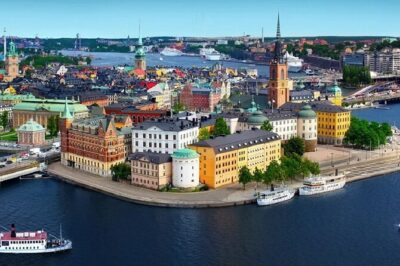
Stortorget is a powerful opening. It’s one of those squares where the stones feel like they’ve heard everything. Here, you get a blend of historical violence and folklore thinking about death.
The stories include the execution of around 90 souls when the Danish King Kristian took Stockholm. Even if you already know Old Town has a hard edge, this framing makes it specific: not general tragedy, but a number tied to a political moment.
Then the tour shifts into belief. You’ll hear about the idea that blood of the dead could be used for curses, and that different body parts had magical uses in folklore. The point is not that you should believe any of it. The point is that people once tried to make sense of death by turning it into something actionable, something they could use, or something they needed protection from.
Practical drawback: the topic can be graphic and heavy. If your idea of fun is more playful mysticism than executions and bodily imagery, this is the stop where you’ll feel it most.
Stop 2, Prästgatan: a street once called Hell
Next comes Prästgatan, and the hook here is the name history. You’ll walk along a street that was formerly called Hell, and you’ll hear what that label suggests about how locals once mapped fear onto everyday geography.
This is a good stop for people who like language and place clues. Even if you’re not a folklore expert, it’s the kind of detail that makes you see cities differently. You start spotting how communities label threat, shame, holiness, and mystery onto street names and routes.
Also, because it’s only about 10 minutes here, it doesn’t slow the tour down. It’s a quick pulse, then you’re moving again.
Same city, a different half-day:
- Stockholm: Hop-On Hop-Off Bus or Boat Option
★ 4.0 · 3,260 reviews - Stockholm: Archipelago Boat Tour
★ 4.4 · 3,110 reviews - Stockholm: Paradox Museum Entry Ticket
★ 4.2 · 3,031 reviews - Stockholm: Highlights Boat Tour
★ 4.2 · 2,845 reviews
Stop 3, Old Town proper: iron wards, vaesen, and door protection
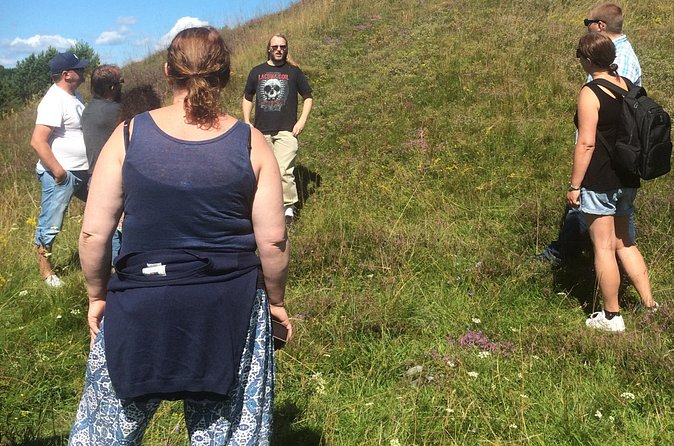
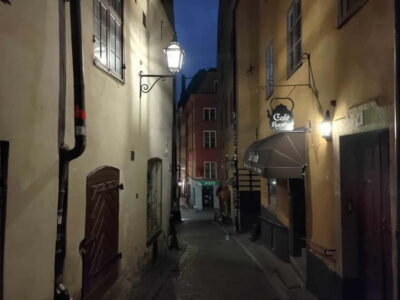
Once the tour enters the densest part of Gamla Stan, the stories get very concrete. At the doorstep of a house, you’ll hear about protection methods against vaesen, including the use of iron.
This is one of the most satisfying parts of the walk because the explanation fits what you can actually see. Doors, thresholds, entrances, and house edges are not just architecture here. They become the imagined boundary between inside safety and outside danger.
You’ll also hear about elves who come with mist and about the Swedish Tomte. These are not random fantasy characters. They’re treated as part of a local system of beliefs about unseen forces and the risk of spirits lingering where people live.
The tour also connects door protection to major life moments, including newborns before baptism, and even protections needed against trolls and the Devil. That sounds extreme, but the logic is consistent in the storytelling: if you think the world is full of threats, you build barriers around the moments when people are most vulnerable.
Practical note: this stop rewards you if you look up as you walk. Old Town is visually busy, so you may miss details unless you slow your pace and let the guide point out what matters.
Stop 4, Logårdstrappan: water spirits that lure you under
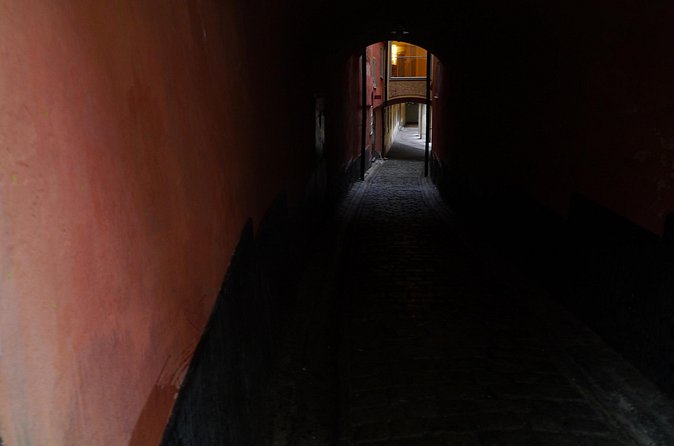
Logårdstrappan is where the mood gets colder, even on a warm day. Here the folklore moves to water linked creatures, and the stories are centered on lures and drownings.
You’ll hear about Näcken, and also about the bäckahästen, which is the Swedish version of the kelpie concept. Then comes Sjörå and the skepps-rå, sea and ship related forms of vaesen. These names matter because they make the folklore feel like a structured world, not just a pile of spooky ideas.
The core warning is consistent: these beings try to drown people and draw them into deeper danger. Again, you don’t have to believe the creatures to appreciate the pattern. It’s a window into how people living near water imagined the risk of rivers, streams, and the shoreline.
If you are the kind of traveler who likes “why this story exists,” this is a great stop. Water is where accidents happen, and where sightlines get weird. Folklore turns real hazards into a clear villain.
Stop 5, Kungsträdgården: huldran, the Skogsrået, and Myrling
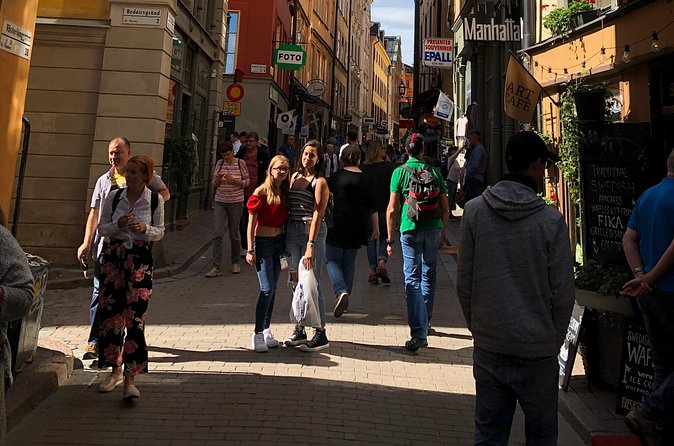
Kungsträdgården shifts you from water to forest and wild edges. The stories here cover vaesen tied to nature, plus darker life and death themes.
You’ll hear about the Skogsrået (also connected to huldran), which brings in the dangerous, seductive idea that the woods can notice you. Then the tour moves into one of the most unsettling figures mentioned on this walk, the undead living child called Myrling.
This stop is longer, about 20 minutes, which usually means the guide is giving more texture, not just moving from one name to another. It’s a chance to connect the dots between land based threats and the door based protections you heard earlier. In the tour logic, threats don’t vanish. They just change costume based on where you are.
Balance check: if you came for lighter ghost drama, this is where the darkness could feel too intense. But if you like folklore that treats fear as something people had to live with, this part delivers.
Stop 6, S:t Jacobs Kyrka: church doors, baptism exorcism, and revenge talk
The final stop takes you outside S:t Jacobs Kyrka, and the stories center on the church door and how protections were understood in a religious setting.
You’ll hear about weak points of the church and about exorcism tied to a child at baptism. That might sound like shock value, but in the tour framework it’s about boundaries again. Church spaces were supposed to be safe, so the belief system created detailed ideas about what could threaten that safety, and what rituals were meant to restore it.
There’s also mention of what to do if you had a worst enemy to punish. That’s the part of the tour that can sound morally uncomfortable, but it’s also historically revealing. It shows how people imagined justice and retribution, sometimes through supernatural thinking when formal systems felt too slow or too distant.
Length here is about 15 minutes, and it’s a strong wrap because it connects back to the earlier theme: protection. Door protection. Iron wards. Ritual safety around newborns. Church boundaries. The tour ends with a sense of structure, not chaos.
What makes this tour great: guide style, question energy, and pacing
The best versions of this tour have one shared trait: the guide’s delivery keeps it sharp. The feedback on the experience highlights guides who are entertaining, funny, and very comfortable with questions, which changes everything for a walking tour.
I also like that the stories cover both real local events and belief systems. Execution history can feel like a textbook on its own, but tied to beliefs about blood and body parts, it turns into a vivid cultural lens. Meanwhile, pure folklore becomes more memorable when the guide anchors it to the specific places where Stockholmers would have moved through daily life.
In terms of pace, it’s short per stop, so you don’t get stuck for a full hour at any single point. That matters in Old Town, where walking speed changes with crowds, photo stops, and weather.
One more realistic note: based on how the walk can run, don’t treat the timing like a hard stopwatch. If the guide has time for questions, the total can run a bit longer than the approximate schedule.
Who should book Bloody Stockholm, and who should think twice
Book it if you like:
- Dark folklore tied to real geography and visible architecture
- A guided walk that feels like storytelling with historical grounding
- Swedish creature names and belief logic, not just generic horror
- Families who want something exciting, with a learning angle, and who can handle death related themes
Think twice if you:
- Want jump scares or a true ghost-hunting format
- Prefer lighter sightseeing with minimal violence and execution talk
- Get uncomfortable with graphic themes, especially early in the tour at Stortorget
This is also a good choice for people who already plan to spend time in Gamla Stan. You’ll see the same streets anyway. This tour gives them a different layer, one made of beliefs, fears, and symbolic protection.
Should you book? My practical take
If you’re doing Stockholm for the first time, you’ll usually fill your days with museums and viewpoints. This tour is the alternative lane, the one that turns the city into a living folklore map.
What makes it worth considering is the value pattern: you’re paying for a guide and a focused walking narrative, and the stops are set up as free admission moments rather than paid museum entries. Add in that the group size is capped at 30 and the duration is short, and it’s a low-commitment way to get a memorable, darker perspective.
For me, the deciding factor is whether you want your Stockholm experience to include uncomfortable stories and belief systems, delivered in a fun, question friendly tone. If yes, this is a strong pick.
FAQ
How long is the Bloody Stockholm 2h tour?
The tour lasts about 1 hour 30 minutes.
Is the tour offered in English?
Yes, it is offered in English.
Where do I meet the guide?
The meeting point is at Nobel Prize Museum, Stortorget 2, 103 16 Stockholm, Sweden.
Where does the tour end?
It ends just outside Old Town on the north side near Kungsträdgården, by Saint Jacob’s Church (Västra Trädgårdsgatan 2A, 111 53 Stockholm, Sweden).
Do I need to buy admission tickets for the stops?
Admission tickets are listed as free for the stops.
How do I get my ticket?
You receive a mobile ticket.
What is the group size limit?
The tour has a maximum of 30 travelers.
Are service animals allowed?
Yes, service animals are allowed.
What happens if I book close to the tour date?
If you book within 18 hours of travel, confirmation is received as soon as possible, subject to availability.
Can I cancel and get a full refund?
Yes. You can cancel up to 24 hours in advance for a full refund.
Is this a traditional ghost tour?
It’s more of an informative dark folklore walk than a classic ghost tour. The focus is storytelling about history, folklore, and protection beliefs.
Just listed in Stockholm
- Stockholm: Old Town by Locals + Exclusive Souvenir Poster★ 5.0 · 4 reviews
- 3 Hours Guided Shopping Tour in Stockholm Thrifting Stores★ 5.0 · 4 reviews
- Icebathing and Sauna in Stockholm nature★ 5.0 · 4 reviews
- Central Stockholm: A Self-Guided Audio Tour in the Modern City★ 5.0 · 4 reviews
- World War II Stockholm Old Town Walking Tour and Army Museum★ 4.6 · 4 reviews
- Stockholm Jogging Tour★ 3.9 · 6 reviews
- Stockholm: Hike, Forest Lunch, and Cold-Water Floating★ 4.9 · 8 reviews
- Wolf and Wildlife Tracking in Sweden★ 5.0 · 9 reviews
2-Hour Experiences, compared.


Bloody Stockholm: ghosts, horror and dark folklore 2h
Read our review →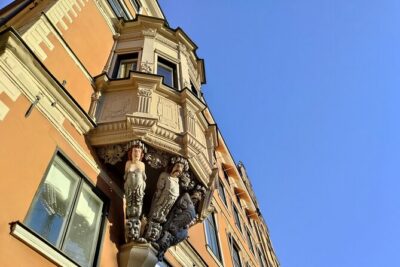
Stockholm Old Town 2h Private Walking Tour – Private local guide
Read our review →
Uppsala Must See 2h city walk – 2h tour of all big attractions!
Read our review →Browse the lists this tour appears in