
If you like stories where engineering meets human error, this guided visit to the Vasa Museum is a great fit. I love the way the tour turns the Vasa warship into a real, cause-and-effect tale, including the ignored warnings before its maiden voyage. I also love the 19th-century maps, because they show how rescuers tracked down a wreck thought to be lost forever.
One possible drawback to consider: at $65 per person, you are paying for the guide and the timed value of getting in fast, so if you would rather wander slowly and read everything at your own pace, the extra cost may not feel worth it.
Key highlights worth showing up for
- Skip-the-line entrance through a separate entrance, so you get moving while others queue
- Guided story of the Swedish Empire and why the ship was built in the first place
- Warnings that were ignored, and the chain of events that led to the Vasa sinking
- 19th-century discovery maps showing how the wreck was located
- Salvage engineering explained, not just shown, with the who and how behind the recovery
- A small-group feel is possible, which means more time for your questions (and humor)
The Vasa Museum, explained the way you actually remember it
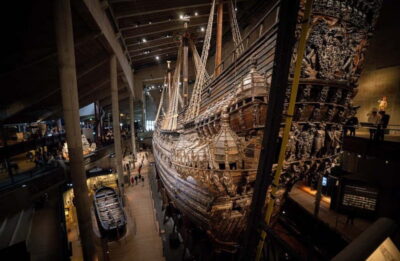
The Vasa isn’t just a boat sitting behind glass. In a guided tour, it becomes a puzzle you can follow to the end. You start with the Swedish Empire context, then connect it to the war effort that led to the ship being commissioned. From there, the story tightens fast, because you learn what the ship set out to do, what it was expected to be, and what ended up happening instead.
What makes this tour work is that it uses the museum’s artifacts as evidence, not decorations. You’re shown how the pieces fit: design choices, the conditions at sea, and the real-world consequences of ignoring risk. And because it is guided, you are not stuck trying to translate museum text on your own while everyone else flows past.
If you have even a mild interest in ships, engineering, or decision-making under pressure, you will likely feel more satisfied than with a standard self-guided visit. The guide makes the connections, and you get answers while the questions are still fresh.
Other visits to the Vasa Museum:
- Stockholm Pass: Save up to 50% – Includes Vasa Museum Ticket
★ 4.1 · 2,392 reviews - Stockholm: Vasa Museum and Vrak Museum of Wrecks Combo Entry
★ 4.7 · 2,131 reviews - Stockholm: Vasa Museum Tour with Entry Ticket & Guide
★ 5.0 · 537 reviews
Arrive outside, go in quickly, and get your timing right
Meet your guide directly outfront of the Vasa Museum. The big practical win here is the skip-the-line entrance. Instead of waiting with everyone holding tickets, you head in together through a separate entry route.
That matters in Stockholm, especially if you are juggling museum time with transit and dinner. Two hours sounds short, but the tour pacing is designed so you can see the key parts without feeling rushed. You’ll leave with a much better sense of the wreck’s timeline, not just a pile of facts.
A small heads-up: flash photography is not allowed. So if you are photographing the ship or displays, plan for normal lighting and steady shots. And because this is a guided museum experience, it helps to arrive a few minutes early so you can get settled before the group starts moving.
The two-hour tour flow, from Swedish politics to a catastrophic maiden voyage
This visit is built like a story with momentum. You begin by moving straight into the museum with your guide, rather than spending your first minutes hunting for where to start. The guide takes you through the background first, including what the Swedish Empire was trying to achieve during the conflict period when the Vasa was commissioned.
From there, the tour pivots into the part you came for: the ship itself and the events leading to the sinking. You learn why the Vasa was still visible near the shipyard when it went down on its maiden voyage. That detail is more than trivia. It frames the tragedy as something that unfolded in public view, with consequences that would have been painfully obvious to anyone nearby.
The tour also touches the human side of engineering risk, specifically how warnings about seaworthiness were ignored. That is where the guided format shines. Museum labels can tell you what happened. A good guide explains how and why people made decisions that, in hindsight, look reckless.
Ignored warnings, and the moment the story becomes clear
One of the most praised parts of the experience is the way the guide handles cause and effect. You’re not just told that the Vasa sank. You’re helped to understand the logic behind the design choices and the failures that followed.
The tour focuses on why the warnings about seaworthiness did not lead to a fix. Even if you do not leave with engineering formulas in your head, you should leave with a clearer model of how risk gets managed. In real life, projects fail for boring reasons like schedule pressure, missing checks, or decisions made by people far from the testing.
Here, you get a historical version of that same lesson. You see how the Vasa’s journey went from expectation to catastrophe fast, and you understand the logic enough to follow the later chapters of the story, when recovery and rescue come into play.
Other museum days in Stockholm:
- Stockholm: ABBA The Museum Entrance Ticket
★ 4.7 · 11,280 reviews - Stockholm: Skansen Open-Air Museum Admission Ticket
★ 4.5 · 3,427 reviews - Stockholm: Paradox Museum Entry Ticket
★ 4.2 · 3,031 reviews - Stockholm: Nobel Prize Museum and Exhibition Entry Ticket
★ 4.3 · 994 reviews
19th-century maps and the chase to find the wreck
After the sinking story, the tour shifts into a different kind of drama: the hunt and the recovery. You’ll hear about how the ship was found later and how salvagers ultimately brought it to the surface.
The tour includes a memorable element, the 19th-century maps used to locate the wreck. That part is valuable because it turns the recovery into a real investigative process. Instead of imagining salvagers wandering around blindly, you get a sense of the methods, the clues, and the limitations of the time.
You can think of this as the second half of the museum experience. The first half explains the failure. The second half explains the response, where people had to solve navigation and search problems long after the event.
If you like how science and problem-solving evolve, this is the section that tends to hook people. It also helps you connect the Vasa story to Sweden’s long relationship with ships, waterways, and hard technical work.
Salvage engineering, explained without losing the plot
Another highlight is the engineering behind the salvage. A guided tour is the difference between seeing the recovered ship as an artifact and understanding it as a recovered object. Salvage is its own technical world, with constraints, timing, and practical decisions that shape the outcome.
This matters because the museum’s ability to display the Vasa depends on what rescuers managed to do. When you hear the salvage engineering explained, the museum stops feeling like a static gallery and starts feeling like the visible result of a giant technical effort.
Also, the way the tour paces the information helps. People often expect two hours to mean a quick scan. Instead, it can take longer inside because there is so much to understand once the guide starts linking events. If you are the kind of person who asks why something failed or how something worked, you will likely end up staying engaged longer than you planned.
Guides make or break a museum tour, and this one tends to hit
The live guides here can speak French, English, Italian, German, and Spanish. That language range is more than convenience. It helps you stay focused, because you are not forced to interpret on the fly.
What stands out most from the guide feedback is passion plus clear structure. Guides like Ben, Giorgia, Kajsa, Frank, Caoihme, Daniella, and Daniele have been specifically mentioned for bringing the material to life and answering questions with confidence. Many people also highlight humor in the mix, especially from guides who clearly love ship history.
One practical takeaway for you: if you care about a particular angle, bring it up early. Some guides are known for tailoring the discussion when they have time, including asking what you want to see. That can turn a good museum visit into a personal one, not just a standard script.
Price and value: is $65 a fair deal for 2 hours?
At about $65 per person for a two-hour guided tour with entry included, you are paying for three things: the museum ticket, the guide, and the skip-the-line entrance.
Self-guided visits can be cheaper. But the cost makes more sense when you want context. The Vasa is not just visually impressive; it is historically layered, technical, and full of cause-and-effect. A guide helps you read the museum like a timeline and understand the trade-offs that led to the sinking and later recovery.
So here is my straightforward way to decide: if you enjoy guided interpretation, ships, engineering, or the human side of technical decisions, $65 is likely good value for your time. If you prefer quiet wandering and you love reading labels at your own pace, you might consider whether the guide is something you would actually use.
Who should book this guided Vasa tour
This tour is a strong match if:
- You like engineering stories, ship history, or historical problem-solving
- You want a guided timeline, including the ignored warnings and why the Vasa sank
- You enjoy maps and the process behind locating and recovering a wreck
- You want answers as you go, not after you leave the museum
It may be less satisfying if you mainly want a slow photo session or you plan to read everything independently. In that case, you might feel the structure takes away from your pace.
Also, there is a note worth paying attention to: the activity is listed as wheelchair accessible, but it is also marked as not suitable for people with mobility impairments and wheelchair users. Because those two statements conflict, I would confirm details with the provider before booking if accessibility is a key factor for you.
Should you book this Vasa Museum guided tour
I think this is a book-worthy option if you want more than a basic museum pass. The tour is specifically built around the Vasa’s story arc: the Swedish Empire background, the maiden voyage tragedy, the warnings ignored, then the later search and salvage engineering explained with the help of historic maps.
If you are on a tight schedule or you hate waiting in lines, the skip-the-line entrance is also a real advantage. And if you like museum guides who can answer questions and keep the tone fun, this format tends to deliver.
FAQ
How long is the Vasa Museum guided tour?
The tour duration is 2 hours.
Where do I meet the guide?
Meet your guide directly outfront of the Vasa Museum.
What is included in the price?
Your ticket includes entry to the Vasa Museum, a live tour guide, and skip-the-line entrance through a separate entrance.
Is hotel pickup included?
No, hotel pickup and drop-off are not included.
What languages are available for the guide?
The live tour guide is available in French, English, Italian, German, and Spanish.
Can I take photos with a flash?
No, flash photography is not allowed.
Are there refreshments or meals included?
No food and drinks are not included.
Can I cancel for a full refund?
Yes, you can cancel up to 24 hours in advance for a full refund.
Is there a reserve now and pay later option?
Yes, reserve now & pay later is offered, so you can book and pay nothing today.
Is the tour suitable for wheelchair users?
The information is mixed: it is listed as wheelchair accessible, but it is also marked not suitable for people with mobility impairments and wheelchair users. Check with the provider before booking.
Just listed in Stockholm
- Stockholm: Old Town by Locals + Exclusive Souvenir Poster★ 5.0 · 4 reviews
- 3 Hours Guided Shopping Tour in Stockholm Thrifting Stores★ 5.0 · 4 reviews
- Icebathing and Sauna in Stockholm nature★ 5.0 · 4 reviews
- Central Stockholm: A Self-Guided Audio Tour in the Modern City★ 5.0 · 4 reviews
- World War II Stockholm Old Town Walking Tour and Army Museum★ 4.6 · 4 reviews
- Stockholm Jogging Tour★ 3.9 · 6 reviews
- Stockholm: Hike, Forest Lunch, and Cold-Water Floating★ 4.9 · 8 reviews
- Wolf and Wildlife Tracking in Sweden★ 5.0 · 9 reviews
Vasa Museum, compared.
Vasa Museum and Vrak Museum of Wrecks Combo Entry
Read our review →

Vasa Museum Guided Tour, Including Ticket & Guide
Read our review →
Old Town & Vasa Museum Skip-the-Line Private Tour
Read our review →
Stockholm Old Town and the Vasa Museum, a Small Group Walking Tour.
Read our review →
Stockholm Must See: City Hall, Gamla Stan and Vasa Museum
Read our review →
Exclusive Grand Stockholm Tour Vasa & Skansen*****
Read our review →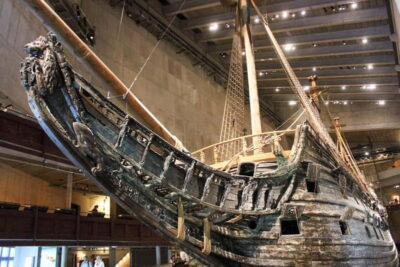
Browse the lists this tour appears in